

Security
Schneier on incident response
Bruce Schneier is a cryptographer and security specialist who is well-known in computer circles even though he has often branched into more general security areas in recent years. His blog is a great source of security news (and, of "quotes of the week" for this page, as readers know). Beyond all that, he travels to many security conferences to give talks, which is just what he did at AppSec USA in Denver on September 18. The keynote topic was "incident response" (IR), which is an area that is finally getting more attention in the security-product space, he said.
Interestingly, Schneier's talk didn't really dwell all that much on IR. Instead, he looked at some trends that are changing the industry, along with some economic principles that are relevant to the computer security market. Along the way, he also described a feedback loop that is used by the US Air Force (USAF) and how it relates to network attacks and the response to them.
Three trends
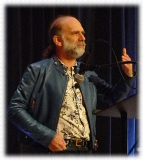
There are three trends that are currently important to the security industry, he said. The first is that we are "losing control of our infrastructure", which is the result of two separate things. The rise of cloud computing "means we no longer have control of our data". Schneier uses Eudora for his email, "but I am a freak". His company (he is the CTO at Co3 Systems, which makes IR tools, as he disclosed near the end of the talk), however, outsources its email to Google.
Moving data to the cloud means that we cannot affect the security of the system any longer, he said. You can't ask Google for more security on your email storage, you just get what they provide. You also have no idea where the actual physical bits of your data reside; they could be anywhere in the world.
We are also accessing our data with devices that we have less control over, which is also a loss of infrastructure control. Mobile devices are often locked down, such that we can't even wipe their memory and storage because there is no access at that level. There are lots of good reasons for locking down devices in that manner, but it does affect security. The business case for companies like Apple and Microsoft to control these devices is quite strong, to the point that Schneier expects to see phone and desktop operating systems converge—to somewhere that is much closer to the "less user control" phone side of that continuum.
The second major trend is that attacks are getting more sophisticated, as we have seen over the last few years. There is a lot of "cyberwar" rhetoric and there is clearly an increase in the capabilities of attackers. He doesn't really like the term "cyberwar", since we are not actually fighting a war in cyberspace, but there are parallels between actual warfare and the internet-based attacks occurring today.
In real wars, you can generally determine who the attacker is by the weaponry used—a tank means a government, since no one else can afford them. In computer attacks, that is not true: everyone is using the same weapons.
You can place attackers on a two-axis graph, where the axes are "skill" and "focus", Schneier said. Script kiddies are clearly low skill, low focus, while attacks like that against Target are from high-skill, low-focus attackers—they didn't want Target's customers' credit card information, they just wanted credit card data. In that case, relative security matters. Since Target was not as well-secured as its "neighbors", it was attacked.
But high-skill, high-focus attacks, like advanced persistent threats (APTs), make for a completely different threat model. APTs are personal for some reason; the attacker wants to get at a particular target. Protecting against that kind of attack comes down to absolute security: is the attacker better than the defender?
As it turns out, we know the answer to that question: yes. When penetration testers attempt to get into a system or network, they essentially always do, he said. We do not know how to defend against targeted attacks. In the history of warfare, as weapons and defenses have evolved, sometimes the attacker has had the advantage and sometimes it has been the defender. On the internet right now, the attacker has the advantage and will for the foreseeable future, Schneier said.
The final trend that he noted was the increasing government involvement in cyberspace. It goes beyond the NSA and other secret services spying on internet activity. There is a "complicated regulatory environment", which means that there is a lot of "legal stuff that organizations have to know and follow". Businesses and other organizations tend to be collateral damage when governments act on the internet—to censor it, conduct espionage on it, or attack adversaries using it. All of that is only going to get worse, he said.
Economics
Schneier then moved into some economic principles that are important to consider when looking at the market of computer-security products. First, network effects are crucial to the success of a product. He cited Metcalfe's law (the value of a network is proportional to the square of the number of connected users) to explain how network effects work for things like SMS, Skype, and Facebook. It is also important to the battle between iOS and Android, or between Mac OS X and Windows. The "big get bigger" due to network effects; Facebook gets bigger because you are going to join the network where your friends are, not the network that is better.
Another important economic concept is fixed vs. marginal costs. For physical products, much of the cost is in marginal costs, whereas in software it is almost all in fixed costs. Creating the first copy of a program costs a lot, but each copy after that costs little to produce. Books are similar, he said. Some printing company could (illegally) start producing copies of his books and sell them for a few dollars, since they would not have to recover the fixed cost by paying him royalties. He could retaliate by temporarily dropping the cost of his book below that of the "competitor", to drive them out of business—which is the tactic that Walmart employs against its local competition, he said.
"Switching costs" is yet another principle that comes into play. It is much more expensive to switch cell phone providers than it is to switch cola brands. He cited Shapiro and Varian's "fundamental theorem" that the total value of a software company is the cumulative cost for its customers to switch to a competitor. In effect, "the higher the switching costs, the more the company can piss you off", he said. AT&T just has to "not suck", while a cola has to be better in some measure.
Another example of high switching costs is trying to move from iTunes to something else: "good luck taking your music" with you. The same goes for trying to move from a Kindle to a Nook (or vice versa). Cell-phone-number portability is an effort to lower switching costs, since a user can switch without having to update all of their contacts, print new business cards, and so on.
The "lemons market" is an idea by George Akerlof that won him the Nobel Prize in Economics. It concerns markets where sellers know a lot more than buyers (i.e. asymmetric markets). In those markets, "bad products drive good products out of the market". If the buyer cannot tell the difference between a good and a bad product, they will buy the bad because it is cheaper, he said. If there are two encryption products on the market, both with the same algorithms, but one is implemented well and the other not, buyers will buy the cheaper one.
This is why "signals" are important. Things like certifications and "those really dumb awards at conferences" are useful. Those are signals that allow the buyers to convince themselves they are buying a "not bad" product. The old adage that "no one ever got fired for buying IBM" is another kind of signal.
The final economic principle Schneier mentioned is "prospect theory", which came from two psychologists. They are the only non-economists to win the Nobel Prize in Economics and they did so by "telling economists that everything they believe is wrong", Schneier said with a chuckle. Unlike previous models, prospect theory shows that humans are risk-averse when it comes to losses, and risk-seeking when it comes to gains.

This behavior is also observed in other primates, Schneier said. The best explanation he has heard comes from evolutionary biology. If you consider a species on the edge of extinction, even a small loss means they are dead. If they can avoid any chance of that loss, they are better off. But a small gain is worth seeking because it will improve the chances to live to see another day.
That theory explains why it is difficult to sell cybersecurity. It is the same with insurance or burglar alarms, he said. If you go to your boss to say you need something to secure the network, he is likely to point out that you didn't have it last month and the network ran just fine. It is not impossible to sell cybersecurity, but it does require fighting against this basic psychological principle.
Response
In computer security, there is a need for response, because both prevention and detection are imperfect. He used to say that security is a process, not a product, but that was a "strategic idea". If you look at it more tactically, security is both a process and a product. He now talks about "people, process, and technology".
But there is a general idea that people can't help with security. There is a focus on automation for tasks like threat detection and system updates. However, response cannot be fully automated because it requires people to understand and react to what is happening. All attacks are different, the networks are different, the regulatory environments are different, and on and on. Those things are not necessarily different in technical ways, either; they are different in "people ways".
All of that means the people-to-technology ratio goes up for response. If you look at real-world emergency response (e.g. police and firefighters), it is similar. And, like with those organizations, security response needs technology that supports people, rather than replacing them.
That's where the USAF's feedback loop comes into play. An observe-orient-decide-act (OODA) loop is what pilots repeatedly use during a dogfight. If you can perform that loop faster than your opponent, you will win the fight. The USAF uses the OODA loop to evaluate technology—it wants technology that supports the pilot in handling one of those four functions.
The same OODA loop is present in incident response, Schneier said. The speed of handling that loop is crucial. Being faster than the attacker means getting them out of your system. So the security industry needs tools to facilitate the OODA loop.
That means better tools to observe what is happening (observe) and to fill in the context from the outside world (orient), which would provide information like the presence of new malware observed in the wild, an upheaval in some country, or that the company is going through a merger. Tools to help with the decision-making process are needed as well (decide), which is an area that needs a lot more work, he said. Who gets to decide, and how those decisions are audited after the fact, are two important pieces of the puzzle. Finally, there is a need for tools to help take the decision and make it happen (act). All those areas are ripe for new tools and we are starting to see them, he said.
For the security industry, the 1990s were the decade of protection, while the 2000s were the decade of detection. This decade will be the decade of response. But, unlike protection and detection tools, response tools will not suffer the same fate—bad products pushing out the good. Because response tools will be people-oriented, the good products will beat out the bad. Incident response tools and products will change the industry, Schneier concluded.
Brief items
Security quotes of the week
It is not hard to imagine, for example, a malicious patch to the RAM controller block which searches each byte group for a magic sync sequence written to consecutive addresses, then executes commands from the next few bytes. As long as Malfab is able to cause the target's system to write data of his choice to consecutive RAM addresses (perhaps by sending it as the payload of an Ethernet frame, which is then buffered in RAM) he can execute arbitrary commands on the backdoor engine.
We have one infrastructure. We can't choose a world where the US gets to spy and the Chinese don't. We get to choose a world where everyone can spy, or a world where no one can spy. We can be secure from everyone, or vulnerable to anyone. And I'm tired of us choosing surveillance over security.
What they do know about it makes it sound like a terrible idea: a bunch of Silicon Valley elites, backed by the Google panopticon and the Mozilla jerks who publicly executed Brendan Eich over his quiet support for traditional marriage, are demanding that the FCC impose sweeping regulations on the companies who bring the Internet to your door. With help from their close ally President Obama, these shysters have made tremendous forward progress against the so-called “evil” corporations who (in reality) own, develop, and generally manage the series of tubes that make up the Internet [YouTube] – corporations who have, in short, ushered in the entire Internet Age and all the good it entails. The only people in this drama who are holding off the regulators are the valiant heroes at the Wall Street Journal and the National Review, who are not afraid to stand athwart the regulatory agenda yelling “stop!,” demanding free markets and free peoples and not an iota less.
Simply Secure announces itself
A new organization to "make security easy and fun" has announced itself in a blog post entitled "Why Hello, World!". Simply Secure is targeting the usability of security solutions: "
If privacy and security aren’t easy and intuitive, they don’t work. Usability is key." The organization was started by Google and Dropbox; it also has the Open Technology Fund as one of its partners. "
To build trust and ensure quality outcomes, one core component of our work will be public audits of interfaces and code. This will help validate the security and usability claims of the efforts we support. More generally, we aim to take a page from the open-source community and make as much of our work transparent and widely-accessible as possible. This means that as we get into the nitty-gritty of learning how to build collaborations around usably secure software, we will share our developing methodologies and expertise publicly. Over time, this will build a body of community resources that will allow all projects in this space to become more usable and more secure."
Kali NetHunter turns Android device into hacker Swiss Army knife (Ars Technica)
Ars Technica takes a look at Kali Linux NetHunter, a penetration testing platform for Nexus devices. "NetHunter is still in its early stages, but it already includes the ability to have the Nexus device emulate a USB human interface device (HID) and launch keyboard attacks on PCs that can be used to automatically elevate privileges on a Windows PC and install a reverse-HTTP tunnel to a remote workstation. It also includes an implementation of the BadUSB man-in-the-middle attack, which can force a Windows PC to recognize the USB-connected phone as a network adapter and re-route all the PC’s traffic through it for monitoring purposes."
Security Collapse in the HTTPS Market (ACM Queue)
ACM's Queue has a lengthy article on the security failures in the HTTPS layer and the prospects for improvement. "This article outlines the systemic vulnerabilities of HTTPS, maps the thriving market for certificates, and analyzes the suggested regulatory and technological solutions on both sides of the Atlantic. The findings show existing yet surprising market patterns and perverse incentives: not unlike the financial sector, the HTTPS market is full of information asymmetries and negative externalities, as a handful of CAs dominate the market and have become 'too big to fail.' Unfortunately, the proposed E.U. legislation will reinforce systemic vulnerabilities, and the proposed technological solutions are far from being adopted at scale. The systemic vulnerabilities in this crucial technology are likely to persist for years to come"
A remotely exploitable hole in bash
The bash shell has a vulnerability in its environment variable processing that could be remotely exploited in some situations — with CGI scripts being at the top of the list. "The fact that an environment variable with an arbitrary name can be used as a carrier for a malicious function definition containing trailing commands makes this vulnerability particularly severe; it enables network-based exploitation." The problem was disclosed (a little) prematurely, so updates are still coming in from the distributors.
New vulnerabilities
apache-poi: two XML-handling flaws
| Package(s): | apache-poi | CVE #(s): | CVE-2014-3529 CVE-2014-3574 | ||||||||||||
| Created: | September 19, 2014 | Updated: | February 23, 2015 | ||||||||||||
| Description: | From the Red Hat bugzilla entries:
CVE-2014-3529: It was found that Apache POI would resolve entities in OOXML documents. A remote attacker able to supply OOXML documents that are parsed by Apache POI could use this flaw to read files accessible to the user running the application server, and potentially perform other more advanced XXE attacks. CVE-2014-3574: It was found that Apache POI would expand an unlimited number of entities in OOXML documents. A remote attacker able to supply OOXML documents that are parsed by Apache POI could use this flaw to trigger a denial of service attack via excessive CPU and memory consumption. | ||||||||||||||
| Alerts: |
| ||||||||||||||
apt: code execution
| Package(s): | apt | CVE #(s): | CVE-2014-6273 | ||||||||||||
| Created: | September 24, 2014 | Updated: | November 12, 2014 | ||||||||||||
| Description: | From the Debian advisory:
The Google Security Team discovered a buffer overflow vulnerability in the HTTP transport code in apt-get. An attacker able to man-in-the-middle a HTTP request to an apt repository can trigger the buffer overflow, leading to a crash of the 'http' apt method binary, or potentially to arbitrary code execution. | ||||||||||||||
| Alerts: |
| ||||||||||||||
bash: command execution
| Package(s): | bash | CVE #(s): | CVE-2014-6271 | ||||||||||||||||||||||||||||||||||||||||||||||||||||||||||||||||||||||||||||||||||||||||||||||||||||||||||||||||||||||||||||||||||||||||||||||||||||||||||||||||||||||||||||||||||||||||||||||||||||||||
| Created: | September 24, 2014 | Updated: | September 30, 2014 | ||||||||||||||||||||||||||||||||||||||||||||||||||||||||||||||||||||||||||||||||||||||||||||||||||||||||||||||||||||||||||||||||||||||||||||||||||||||||||||||||||||||||||||||||||||||||||||||||||||||||
| Description: | From the Red Hat advisory:
A flaw was found in the way Bash evaluated certain specially crafted environment variables. An attacker could use this flaw to override or bypass environment restrictions to execute shell commands. Certain services and applications allow remote unauthenticated attackers to provide environment variables, allowing them to exploit this issue. See this message for more details. | ||||||||||||||||||||||||||||||||||||||||||||||||||||||||||||||||||||||||||||||||||||||||||||||||||||||||||||||||||||||||||||||||||||||||||||||||||||||||||||||||||||||||||||||||||||||||||||||||||||||||||
| Alerts: |
| ||||||||||||||||||||||||||||||||||||||||||||||||||||||||||||||||||||||||||||||||||||||||||||||||||||||||||||||||||||||||||||||||||||||||||||||||||||||||||||||||||||||||||||||||||||||||||||||||||||||||||
c-icap: denial of service
| Package(s): | c-icap | CVE #(s): | CVE-2013-7401 CVE-2013-7402 | ||||||||||||||||
| Created: | September 22, 2014 | Updated: | January 5, 2015 | ||||||||||||||||
| Description: | From the Gentoo advisory:
c-icap contains a flaw in the parse_request() function of request.c that may allow a remote denial of service. The issue is triggered when the buffer fails to contain a ' ' or '?' symbol, which will cause the end pointer to increase and surpass allocated memory. With a specially crafted request (e.g. via the OPTIONS method), a remote attacker can cause a loss of availability for the program. | ||||||||||||||||||
| Alerts: |
| ||||||||||||||||||
chromium: denial of service
| Package(s): | chromium | CVE #(s): | CVE-2014-3178 CVE-2014-3179 | ||||||||||||||||||||
| Created: | September 22, 2014 | Updated: | October 10, 2014 | ||||||||||||||||||||
| Description: | From the CVE entries:
Use-after-free vulnerability in core/dom/Node.cpp in Blink, as used in Google Chrome before 37.0.2062.120, allows remote attackers to cause a denial of service or possibly have unspecified other impact by leveraging improper handling of render-tree inconsistencies. (CVE-2014-3178) Multiple unspecified vulnerabilities in Google Chrome before 37.0.2062.120 allow attackers to cause a denial of service or possibly have other impact via unknown vectors. (CVE-2014-3179) | ||||||||||||||||||||||
| Alerts: |
| ||||||||||||||||||||||
haproxy: denial of service
| Package(s): | haproxy | CVE #(s): | CVE-2014-6269 | ||||||||||||
| Created: | September 24, 2014 | Updated: | September 24, 2014 | ||||||||||||
| Description: | From the Red Hat advisory:
A buffer overflow flaw was discovered in the way HAProxy handled, under very specific conditions, data uploaded from a client. A remote attacker could possibly use this flaw to crash HAProxy. | ||||||||||||||
| Alerts: |
| ||||||||||||||
haproxy: unspecified vulnerabilities
| Package(s): | haproxy | CVE #(s): | |||||
| Created: | September 19, 2014 | Updated: | September 24, 2014 | ||||
| Description: | The Fedora advisory simply says:
Update to upstream stable release 1.5.4 | ||||||
| Alerts: |
| ||||||
kernel: three vulnerabilities
| Package(s): | kernel | CVE #(s): | CVE-2014-3186 CVE-2014-3181 CVE-2014-6410 | ||||||||||||||||||||||||||||||||||||||||||||||||||||||||||||||||||||||||||||||||||||||||||||||||||||||||||||||||||||||||||||||||||||||||||||||||||||||||||||||||||||||||||||||||
| Created: | September 19, 2014 | Updated: | December 11, 2014 | ||||||||||||||||||||||||||||||||||||||||||||||||||||||||||||||||||||||||||||||||||||||||||||||||||||||||||||||||||||||||||||||||||||||||||||||||||||||||||||||||||||||||||||||||
| Description: | From the Red Hat bugzilla entries:
CVE-2014-3186: Linux kernel built with the Human Interface Device(HID) Bus support(CONFIG_HID) along with a driver for Minibox PicoLCD devices support(CONFIG_HID_PICOLCD), is vulnerable to an OOB write flaw. It could occur if a device offers an HID report with arbitrary(>64) data size value. A local user with physical access to the system could use this flaw to crash the system resulting in DoS or potentially, escalate their privileges on the system. CVE-2014-3181: Linux kernel built with the Human Interface Device(HID) Bus support(CONFIG_HID) along with a driver for Apple Magic Mouse/Trackpad multi-touch, is vulnerable to an OOB write flaw. It could occur if a device offers an HID report of arbitrary length. A local user with physical access to the system could use this flaw to crash the system resulting in DoS or potentially, escalate their privileges on the system. CVE-2014-6410: Linux kernel built with the UDF file system support(CONFIG_UDF_FS) is vulnerable to a crash due to stack overflow through infinite recursion. It occurs while traversing a long ICB hierarchy. a user/program able to mount such a file system could use this flaw to crash the system kernel resulting in DoS. | ||||||||||||||||||||||||||||||||||||||||||||||||||||||||||||||||||||||||||||||||||||||||||||||||||||||||||||||||||||||||||||||||||||||||||||||||||||||||||||||||||||||||||||||||||
| Alerts: |
| ||||||||||||||||||||||||||||||||||||||||||||||||||||||||||||||||||||||||||||||||||||||||||||||||||||||||||||||||||||||||||||||||||||||||||||||||||||||||||||||||||||||||||||||||||
kernel: denial of service
| Package(s): | kernel | CVE #(s): | CVE-2014-3601 | ||||||||||||||||||||||||||||||||||||||||||||||||||||||||||||||||||||||||||||||||||||||||||||||||||||||||||||||||||||||||||||||||||||||||||||||||||||||||||||
| Created: | September 24, 2014 | Updated: | September 29, 2014 | ||||||||||||||||||||||||||||||||||||||||||||||||||||||||||||||||||||||||||||||||||||||||||||||||||||||||||||||||||||||||||||||||||||||||||||||||||||||||||||
| Description: | From the CVE entry:
The kvm_iommu_map_pages function in virt/kvm/iommu.c in the Linux kernel through 3.16.1 miscalculates the number of pages during the handling of a mapping failure, which allows guest OS users to (1) cause a denial of service (host OS memory corruption) or possibly have unspecified other impact by triggering a large gfn value or (2) cause a denial of service (host OS memory consumption) by triggering a small gfn value that leads to permanently pinned pages. | ||||||||||||||||||||||||||||||||||||||||||||||||||||||||||||||||||||||||||||||||||||||||||||||||||||||||||||||||||||||||||||||||||||||||||||||||||||||||||||||
| Alerts: |
| ||||||||||||||||||||||||||||||||||||||||||||||||||||||||||||||||||||||||||||||||||||||||||||||||||||||||||||||||||||||||||||||||||||||||||||||||||||||||||||||
libav: multiple unspecified vulnerabilities
| Package(s): | libav | CVE #(s): | CVE-2013-7020 | ||||||||||||
| Created: | September 18, 2014 | Updated: | November 25, 2014 | ||||||||||||
| Description: | The Debian advisory has the following information, but the link doesn't provide any real information on which are being fixed for 0.8.15 (or .16), which is evidently the version being used:
Several security issues have been corrected in multiple demuxers and decoders of the libav multimedia library. A full list of the changes is available at http://git.libav.org/?p=libav.git;a=blob;f=Changelog;hb=refs/tags/v0.8.15 | ||||||||||||||
| Alerts: |
| ||||||||||||||
nginx: virtual host confusion attacks
| Package(s): | nginx | CVE #(s): | CVE-2014-3616 | ||||||||||||||||||||||||||||
| Created: | September 22, 2014 | Updated: | February 9, 2015 | ||||||||||||||||||||||||||||
| Description: | From the Debian advisory:
Antoine Delignat-Lavaud and Karthikeyan Bhargavan discovered that it was possible to reuse cached SSL sessions in unrelated contexts, allowing virtual host confusion attacks in some configurations by an attacker in a privileged network position. | ||||||||||||||||||||||||||||||
| Alerts: |
| ||||||||||||||||||||||||||||||
pdns-recursor: denial of service
| Package(s): | pdns-recursor | CVE #(s): | CVE-2014-3614 | ||||||||
| Created: | September 19, 2014 | Updated: | September 24, 2014 | ||||||||
| Description: | From the Red Hat bugzilla entry:
Recently, we've discovered that PowerDNS Recursor 3.6.0 (but NOT earlier) can crash when exposed to a specific sequence of malformed packets. This sequence happened spontaneously with one of our largest deployments, and the packets did not appear to have a malicious origin. Yet, this crash can be triggered remotely, leading to a denial of service attack. There appears to be no way to use this crash for system compromise or stack overflow. | ||||||||||
| Alerts: |
| ||||||||||
phpmyadmin: privilege escalation
| Package(s): | phpmyadmin | CVE #(s): | CVE-2014-6300 | ||||||||||||||||||||||||
| Created: | September 22, 2014 | Updated: | September 25, 2014 | ||||||||||||||||||||||||
| Description: | From the Mageia advisory:
In phpMyAdmin before 4.1.14.4, by deceiving a logged-in user to click on a crafted URL, it is possible to perform remote code execution and in some cases, create a root account due to a DOM based XSS vulnerability in the micro history feature. | ||||||||||||||||||||||||||
| Alerts: |
| ||||||||||||||||||||||||||
ReviewBoard: two vulnerabilities
| Package(s): | ReviewBoard | CVE #(s): | |||||
| Created: | September 19, 2014 | Updated: | September 24, 2014 | ||||
| Description: | From the ReviewBoard release notes:
Fixed a vulnerability where a URL to a diff fragment could be crafted that would inject custom HTML into the page. An attacker could send such a URL to another user and execute code in their browser session. This was reported by Uchida. A CVE number is pending. The Original File and Patched File resources could be used to access files on a private review request that the user did not have access to, if they knew the appropriate database IDs. A CVE number is pending. | ||||||
| Alerts: |
| ||||||
Page editor: Jake Edge
Next page:
Kernel development>>