

Development
Combating fragmentation in automotive Linux
Day one of the 2014 Automotive Linux Summit (ALS) in Tokyo concluded with a panel discussion that took aim squarely at one of the well-known but rarely discussed challenges of Linux adoption in the industry: preventing fragmentation. In particular, the automotive Linux marketplace has seen the formation of multiple industry consortia and alliances in recent years, and those groups seem to have overlapping—if not outright competing—goals. Representatives from two of the largest such groups, the GENIVI Alliance and Automotive Grade Linux, sat down for the panel session to discuss how they see their projects co-existing and to announce the beginning of some formal collaboration on software development projects.
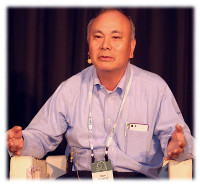
The panel included Rudolf Streif from the Linux Foundation (which serves as host of the AGL project), Dan Cauchy from AGL, Dean Mars from GENIVI, and Hisao Munakata from AGL-and-GENIVI-member Renesas. The moderator was automotive industry analyst Roger Lanctot, who started off the session by commenting on how the various industry groups perceive their work in relation to Google's announcement the previous week that it was making a concerted push to enter the automotive software market.
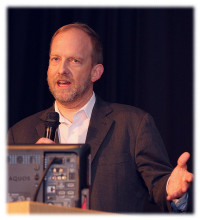
Google is "an uninvited guest in our industry," Lanctot said, and one that has a very different idea of what collaboration means. The Google strategy is to offer its partners what it thinks is "an offer you can't refuse" in the style of The Godfather, he said: it has hundreds of millions of dollars of marketing opportunities to offer in exchange for full access to customers' data. And it also wants automakers to hand total control over the user interface and system-level components to Google, he added, who seems to be planning to deploy Android in car head units just as it has in handsets and tablets.
But the terms of that offer are not, Lanctot thinks, likely to gain much traction. Automakers have strict system-level requirements that they know Android cannot meet, he said—including fast boot time, low power consumption, privacy protection, and integration with unique data services (such as traffic information). He also commented that automakers have always sought to differentiate their products from each other's through customizing the user interface, which makes Google's "one UI fits all" approach a non-starter.
But the most fundamental problem, he said, is that Google seems to be saying that it can impose a single regime on the automotive software industry and, thus, prevent fragmentation. The industry itself prefers to avoid fragmentation by forming collaborative alliances—and the number of companies who participate in GENIVI and AGL dwarfs the number who have agreed to work with Google.
Of course, that still leaves open the fact that GENIVI and AGL have similar (though not identical) goals, which could lead to fragmentation on its own. Lanctot asked the panelists to explain how the two projects differ and are alike. His own assessment, he said, is that GENIVI wants to create a set of packages that carmakers can add to their own Linux distributions, whereas AGL wants to build a full Linux distribution of its own.
The panel more or less concurred with that assessment; Cauchy (who commented that before he worked with AGL he had been in charge of compliance efforts at GENIVI) contended that both approaches are needed. Some OEMs will always prefer to build more of their system in-house, after all. Mars noted that the origins of the organizations were quite different as well. GENIVI is an industry alliance created with the concept of member companies sharing assets, while AGL was envisioned as a "do everything in the open" collaborative project. Where they overlap, he said, GENIVI has started to open up its assets, but it still defaults to working within the confines of its own program.
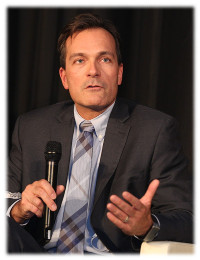
Lanctot asked Streif whether or not these different approaches would create friction. Streif's answer was that the distinction was mainly one of communication styles, not opposing views of end products. He has worked on a large number of embedded Linux projects over the years, he said, and everyone knows that creating a product is a lot of work. AGL wants to create a baseline that you can "download and use" right away, he said, which is something that has become more difficult to do in recent years as embedded Linux distributions have grown. But he compared AGL to Debian or Fedora: anyone can download and use them as-is, but that does not prohibit the possibility of commercial vendors like Red Hat and Canonical building businesses on top of them.
The collaboration between AGL and GENIVI will begin in earnest with the Media Manager project. Media Manager is a component for providing access to multimedia files on connected consumer electronics devices (e.g., phones and tablets) to applications running on the car's in-vehicle infotainment (IVI) head unit. The goal is to enable any media player application to browse, search, and play back content (including access to metadata like artist information and remaining play time) found on a connected device, regardless of the device specifics.
As the panel indicated, however, they do not intend for Media Manager to be a one-shot collaboration. GENIVI has had a head start of several years, and is already shipping in several BMW vehicles. AGL has only recently set out to create formal specification documents, but those specifications will standardize aspects of AGL's "preview" software releases, which have long included GENIVI software components. Streif pointed out that automotive, like every vertical market, struggles with Not Invented Here (NIH) syndrome, but he said that Linux inevitably overcomes NIH. Munakata concurred on that point; he said that it was important to note that AGL was only launched the same day that GENIVI was releasing its first software projects. Nevertheless, history indicates that "going it alone" can never match the speed and development power of a collaborative project.
The panel touched on several other interesting topics, such as the impact that Tesla Motors has had. The panelists agreed that its disruptive effect is highly beneficial, as, for example, its radically different IVI design demonstrates that new things are possible, whereas other carmakers have often just used Linux to re-implement the same systems that they have been shipping in cars for 20 years. They also discussed when US automakers will get on board with automotive Linux collaborations, predicting that it will be soon, since many of them are already exploring Linux individually. In response to an audience question, the panel commented on the value of building IVI systems that consumers can customize and modify themselves; all agreed that it is valuable, and said OEMs are supportive of it.
Historically, how GENIVI, AGL, and other automotive Linux efforts interrelate has been a subject of some confusion; the fact that GENIVI and AGL are committed to working together on projects moving forward may not simplify matters, but it undoubtedly makes it clear that the various players involved are all working toward the same goal.
[The author would like to thank The Linux Foundation for travel assistance to attend ALS 2014.]
Brief items
Quotes of the week
PyOpenGL 3.1.0 available
PyOpenGL 3.1.0 has been released. Python 2.5 support has been dropped, experimental support for GLES and EGL has been added, and there have been several additional changes—such as " Version 19 of the code-coverage collection utility kcov has been released. Most notable in this new release is support for analyzing bash and sh shell scripts.
better isolation and pervasive lazy-loading behaviour to prevent
loading unused libraries (e.g. GLUT in non-GLUT contexts or GLES in
OpenGL contexts)"
and more automated generation of wrappers.
Kcov v19 available
Newsletters and articles
Development newsletters from the past week
- What's cooking in git.git (June 26)
- LLVM Weekly (June 30)
- OCaml Weekly News (July 1)
- OpenStack Community Weekly Newsletter (June 27)
- Perl Weekly (June 30)
- PostgreSQL Weekly News (June 29)
- Python Weekly (June 26)
- Ruby Weekly (June 26)
- This Week in Rust (June 30)
- Tor Weekly News (July 2)
- Wikimedia Tech News (June 30)
Where KDE is going - Part 1 (KDE.news)
Over at KDE.news, Jos Poortvliet has a look at where KDE is today and where it is going in the future. It is part one of a "mini series". This piece looks at the community, Plasma, Frameworks, design, and applications, while the next will cover governance and how the community has been changing. "Experiences in the world of mobile and web applications have shown that users are far more likely to start using features and appreciate small batches instead of large dumps. Short release cycles can bring bug fixes and improvements to our users much faster. On the other hand, most users of KDE software access their software and updates through the downstream distributions which are on slower release cycles even though they have repositories for updated software. [Therefore] this is a discussion which needs to include the distributions as much as the upstream developers."
Where KDE is going - Part 2 (KDE.news)
Jos Poortvliet continues his coverage of the KDE community's present and future. This segment looks at KDE governance and the role of KDE e.V. and the Community Working Group. "In the last 8 years or so, KDE e.V. has been the major driver behind increasing the number of developer sprints and has created the Fiduciary Licensing Agreement which allows it to re-license KDE code when needed, while protecting developers’ interests. The Code of Conduct originated with KDE e.V., as did our Community Working Group which helps deal with communication issues in the community."
Day: In praise of Jim Hall
At his blog, Allan Day points GNOME users and developers to some new usability research about GNOME 3.10 and 3.12 conducted by Jim Hall, a graduate student at the University of Minnesota. Day has started filing a number of bug reports based on Hall's findings, including problems with Nautilus bookmarking and confusion over the purpose of the GNOME Software application. The full data set is not yet available online, but Hall is scheduled to present it at GUADEC in July.
Page editor: Nathan Willis
Next page:
Announcements>>