

Leading items
Welcome to the LWN.net Weekly Edition for October 15, 2026
This edition contains the following feature content:
- The 2026 Maintainers Summit: a writeup of topics discussed at the yearly, invite-only, gathering of kernel maintainers.
- An update on Rust's project goals: an inside view of the process of making changes to Rust.
- GCC development with large-language models: GCC's LLM policy is restrictive of LLM-generated code, but contributors are still using them for bug-hunting, research, and more.
- Adding kernel control-flow-integrity checking to GCC: Kees Cook explains changes to GCC to help prevent one form of kernel exploits.
- The state of systemd: 2026 edition: how the project is coping with LLMs, and some of the major new features added in the last year.
- Owning C types from Rust code: a look at work to provide a Rust trait for objects allocated in C.
- Collaborating with out-of-tree tracers: the frustrating catch-22 keeping the LTTng tracing framework from inclusion in the mainline kernel.
- The [vx]swap showdown: there are two solutions competing to solve the inefficient use of swap resources, but it may be a while before one makes it to the kernel.
- KDE Linux at two: Project Banana has made a lot of progress, but still has some work to do before reaching beta status.
This week's edition also includes these inner pages:
- Brief items: Brief news items from throughout the community.
- Announcements: Newsletters, conferences, security updates, patches, and more.
Please enjoy this week's edition, and, as always, thank you for supporting LWN.net.
The 2026 Maintainers Summit
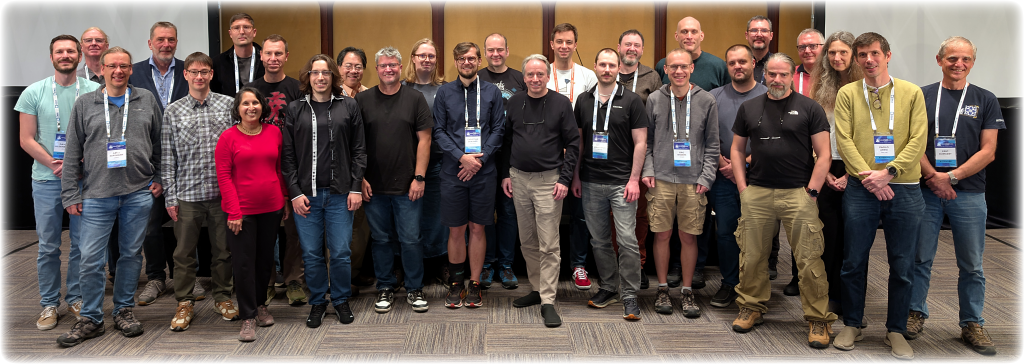
The Maintainers Summit is a one-day, invitation-only gathering of about 30 kernel developers; it is held once each year to discuss policy-related issues that are not always amenable to resolution via email. The 2026 event was scheduled for October 8 in Prague, Czechia. Unsurprisingly, the discussion there was dominated by large language models (LLMs) and their effect on the development community, but some time was also found to talk about security bugs and long-term succession planning.Unlike previous years, the 2026 Summit did not have a well-defined schedule with specific developers identified to lead the discussion on each topic. The conversation was rather more free-flowing, and this writeup will match that structure (or lack thereof). Some minimal reordering has been done in an attempt to provide a more coherent overview.
TL;DR
For those who do not want to plow through all that follows, here is a summary of the most significant conclusions. Please note that this is entirely my interpretation; it is not any sort of official communication from the Summit.
- Sashiko no longer reports pre-existing bugs found when reviewing patches; the reaction to this change was mixed. Sashiko is appreciated, but some maintainers fear it fuels the rapid tweak-and-resend cycle that new submitters tend to fall into.
- Linus Torvalds believes that blaming LLMs for the kernel community's problems is wrong, when the problem is LLM users who do not understand how to use them or how the kernel works. A properly trained LLM is a useful tool, but it takes a lot of time to reach that point.
- Torvalds and others repeatedly said low-quality contributions from new developers should receive low priority, and that the community should stop trying to make contribution easy. Many developers said, repeatedly, that trying to mentor those developers is almost always a waste of time; they do not listen.
- There is some concern about companies maintaining private kernels with LLM help, but there does not seem to be much to be done about it.
- Kernel developers should not be required to use LLMs to work in the community, but those who do need to have enough resources available to generate acceptable results.
- The requirement to add Assisted-by tags to patches created with LLMs will be removed, but maintainers still want to know about how a patch was created.
- The development community is struggling to keep up with the flood of security patches, and will continue to for some time. Some of the most urgent fixes may bypass maintainers and go straight to Torvalds. Maintainers were cautioned against telling their employers about vulnerabilities before public disclosure happens.
- The maintainers each briefly presented an aspect of the development process that causes them pain; many talked about the review process, keeping up with the load, and submitters who are not interested in learning.
- Torvalds said that the community should start thinking more about how leadership succession should work so that there will be a plan in place when, some years from now, he decides to retire.
Sashiko and patch review
The initial topic was automated patch review, and the Sashiko review system in particular. When Sashiko is looking at a specific patch, it often identifies (and reports on) problems that already exist in the code that is modified by that patch. Developers have a love-and-hate relationship with the resulting reports; it is good to know about the bugs, but nobody is thrilled to be given a laundry list of problems in need of fixing, especially if it is seen as an obstacle that must be overcome before they can merge the changes they actually intended to implement.
Recently, Sashiko developer Roman Gushchin announced that pre-existing bugs would no longer be included in patch reviews; instead, they will be stored into a separate database and made available to maintainers. Ted Ts'o started the Summit discussion by mentioning this change, noting that there is a large backlog of problems that no longer appear in Sashiko reviews. Peter Zijlstra asked why this change was made, since it is still important to know about those bugs; Gushchin answered that the bugs are still being detected, but they are hidden from the reports and set aside waiting for somebody to deal with them.
Christoph Hellwig said that it would be better to keep the pre-existing problems in the patch review, but perhaps mark them differently so that submitters know they are not required to address them. Old problems should not be forced onto new submitters, he said. Mark Brown agreed, saying that submitters should not have to fix a structural problem in order to get a spelling fix in. Hellwig added that removing the pre-existing items is worse, since they are problems that need to be fixed eventually. Gushchin repeated that those problems are collected for people who are interested in fixing them.
Zijlstra complained about maintainers who refuse to consider patches until Sashiko reports that it has found no problems. Hellwig, though, said that Sashiko reviews are a good test for submitters; if they know what they are doing, they should be able to explain why a warning is wrong. Thomas Gleixner replied that the worst submitters will just feed the review into their LLM and send the response.
Ts'o suggested that the best practice will differ from one subsystem to the next. In larger subsystems, the sub-maintainers may not have the skills to tell whether a given bug report is valid or not; they are having a harder time dealing with false positives. A small subsystem with expert maintainers handles those reports better. The solution is partly cultural, he said; it is necessary to tell people that they can ignore the pre-existing problems. Dave Airlie suggested splitting the report into two emails, one with the review of the patch and a second listing the pre-existing problems.
Hellwig shifted the topic slightly by complaining that Sashiko drops most of the recipients from its replies; they should go to everybody, he said, or the thread of the discussion will be broken. David Hildenbrand was quick to disagree, though; in the memory-management subsystem, the Sashiko emails are seen as useful for maintainers, but should not be automatically sent back to the submitter or the mailing list. In a complaint that was heard a few times during the day, he said that submitters spend time submitting multiple versions of a patch set that address comments from Sashiko before human reviewers have a chance to say whether the patch makes sense at all. The Sashiko reviews tend to discourage human reviews in general. His suggestion was that Sashiko should be the last line of defense rather than the first; maintainers should say when the automated review happens.
Review practices
That led to a discussion on review practices and when human reviewers should get involved with a submission. Ts'o said that, in the ext4 filesystem, it depends on the size of the series and the reputation of the submitter. A single patch from an unknown contributor is likely to be LLM-generated crap, so it ends up low on the prioritized list of work to review. A larger series, though, requires architectural review, so he tends to look mainly at the cover letter and limit comments to the overall design.
Jiri Kosina said that deprioritizing unknown contributors is too easy of a solution; in his experience, the patches they submit are often valid. Brown said that proximity to the hardware makes a difference, and that one-off patches to low-level code often have little value. Paolo Abeni said that, in the networking subsystem, there is a complicated scheme for prioritizing reviews that depends on the contributor's reputation, how many reviews that contributor has done, and the reputation of the contributor's employer as well. Airlie warned that tracking reputations raises privacy problems and invites developers to game the system; he understands why that approach has appeal, but a better way is needed. Konstantin Ryabitsev agreed that any reputation system will be gamed.
Laurent Pinchart said that some developers are frustrated that they have to
justify their work against criticisms from Sashiko while other,
LLM-generated patches appear to be accepted immediately. Abeni defended
the automated reviews, though, saying that the number of patches
introducing bugs has dropped considerably. Zijlstra said that, while
reading LLM-generated reviews "shuts my brain down
", he still
thought that the tool is useful; it finds real problems.
Linus speaks
At this point Torvalds, who had kept silent until now, spoke up. The problem, he said, is that we are getting increasing numbers of patches from people who do not know the kernel. By pointing the finger at LLMs, maintainers are blaming the wrong thing. LLMs can do a good job, but they are being driven by people who have no clue, and the results are ugly. He suggested maybe delaying reports from Sashiko for 24 hours; that will keep clueless developers from getting an immediate response and cranking out new versions of their work.
He has been playing with an LLM on a separate project for several months to learn about the technology, but hadn't used one on the kernel until last week. He took an old patch and had the LLM revise it; the result has made him unwilling to work without an LLM. He plans to post that series at some point. Why bother, he asked, to search for all of the call sites of a function he has just modified, when the tool can fix them all automatically? But, he said, it took six months to set up the tool to not produce bad responses. If you are a competent developer, he said, an LLM makes a great tool, but only after that effort has been put in to set it up. He resisted suggestions to post his LLM-training materials, saying that each developer needs to go through that process separately.
In conclusion, he said, arguments about how to deal with people using LLMs are misdirected; instead, developers should be focused on how to use these tools well. Hildenbrand said that Torvalds is an expert, but that we still have to deal with all of the non-experts who are submitting patches; Torvalds said to simply deprioritize them.
Sasha Levin suggested putting more information into the repository to try to direct the tools; he later posted a first installment toward building up that information. Ts'o said that it would be useful to try to provide better input for the developers who are willing to put in the effort. Alexei Starovoitov, though, answered that it is not the maintainers' job to teach humans how to work on the kernel. The community is teaching bots by way of the mailing lists, though, and that is reinforcing the problems with rapid reposting of patches.
Gushchin said that, eventually, Sashiko may be able to tell a contributor that a patch is a bad idea in general and should not be revised. Greg Kroah-Hartman said that we can expect to be on the receiving end of a firehose for the next 18 months, then we will have fixed most of the bugs and life will get better. Pinchart responded that fixing the bugs is not enough; the kernel is full of bad APIs that are easier to misuse than to use correctly. Kroah-Hartman said that the bugs will eventually be fixed, then there will be space to work on the APIs.
Ryabitsev said that problem is that contributing to the kernel has always been gated; it is too hard for many developers to do successfully. LLMs have made the creation of kernel patches easy. Pinchart said that a lot of LLM-using contributors just want to see their name in the changelog; they are not going to stay around, so any effort put into mentoring them is wasted. Torvalds repeated that maintainers should simply deprioritize those contributions. Hildenbrand asked how that could be done; Zijlstra suggested responding to a patch and seeing whether LLM-generated text comes back. Comments that do not evoke a clear human response can simply be ignored. Kroah-Hartman said that is the value of pointing out trivial items, like include files in the wrong order. Christian Brauner said that overly verbose changelogs are often a sign of LLM use.
Airlie suggested adding guidance for LLMs that prohibits them from writing changelogs. Levin has been trying to add some of that type of guidance for a while; that effort is likely to be pursued further. There was general agreement that, even if the code is written by an LLM, the accompanying changelog should be written by the human behind the work.
Private kernels
Brauner said that the work of the kernel community is changing in fundamental ways, and what it means for Linux is unclear. There is increasing interest at companies in maintaining private forks of the kernel and not bothering with upstream. Zijlstra suggested asking Google how well that works; Gleixner added that the fundamental economics around maintaining a kernel have not changed. Brauner said that the developers in the room had grown up in an environment dominated by open-source software, and that working with it could lead to a good career; if that is no longer the case, why should anybody bother contributing back?
A number of participants suggested that any company wanting to try its luck with a private fork was welcome to do so. Kroah-Hartman said that the community's goal has always been to make it cheaper to work upstream than to maintain private code. Miguel Ojeda asked whether that was still possible; he knows somebody who has used an LLM to summon forth a complete kernel written in Rust. How can working upstream be cheaper than that? Torvalds said that, if it gets to that point, the community may no longer be viable, but that is not the situation now. Starovoitov said he knew of five working kernels that had been generated in this way; Torvalds answered that there is no point in worrying about them.
Tso's said that, if somebody wants to conjure up a fast microkernel for a specific use case, they can do that now, but a general-purpose kernel designed to handle random corner cases is a different story. He thinks that there will be a demand for the Linux kernel for some time yet. Starovoitov stressed the need to understand why there is interest in generating private kernels; Linux, he said, is too full of holes that are not being fixed quickly enough, and contributing to the kernel is too hard.
Too hard, or too easy?
This was my chance to share a couple of anecdotes I had been saving for this gathering. While running on the unending treadmill that is keeping up with the linux-kernel mailing list, I had recently encountered a series of well over 100 patches, all sent within an hour from a new identity, making significant changes all over the kernel tree. When viewed that way, those patches are the obvious output of an unleashed bot and best ignored, but most maintainers only see a few of them, miss the pattern, and attempt to engage seriously with the sender. So many of those patches are applied.
There is an incredible flood of first-time contributors (nearly 800 in 7.3 alone) burying the community in patches. There have been plenty of cases of first-time contributors who make non-trivial changes to multiple subsystems over a short period of time. To me, it is clear that many of these submitters do not understand what they are doing, and they will not be around to fix or maintain those patches. But a lot of that code is getting into the kernel. My fear is that we are building up a collection of code that nobody understands, and that one day we will wake up and find that we have completely lost control of our kernel.
Airlie responded that we never really did have control over it. Torvalds said that the time has come to make it harder for new people to contribute code to the kernel. People like Kroah-Hartman have spent years trying to teach people how to contribute; it is time to stop doing that, he said. Ojeda said that there is a need to deprioritize these contributors, but that we still need to find talented people to join our community. That means finding ways to focus on the people who actually matter. For example, the people who take the time to go to conferences are much more likely to stay around. The vast majority of patches from new contributors are not worth it, but some are, and identifying them is hard.
Shuah Khan said that she can identify the people who will stick around fairly quickly, and some of the new folks who have come in are excellent. For this reason, she still spends a lot of time with people sending spelling fixes. Hellwig said that developers should be able to use whatever tools they want. For any non-trivial work, there will always be problems to fix; at that point, it is a matter of whether it is possible to have a real conversation with the contributor. Abeni, though, objected that this approach does not scale for the larger subsystems.
Generating code
Ojeda raised the topic of where generating code with LLMs makes sense. In the presence of a clear specification and a concrete problem, an LLM can create good results, he said. The tools can be good for trying out concepts; it may not even be necessary to look at the resulting code before tossing it and implementing a successful concept properly. Generating tests is another place where LLMs can do well. Brauner said that LLMs can be good for prototyping.
Hildenbrand said that the discussion had focused on new contributors, which is fine, but how can we let other maintainers know that it is acceptable to ignore patches from those people? Hellwig said that it is always acceptable to ignore patches; I replied that, for many years, we had been working hard to prevent patches from falling through the cracks.
Torvalds suggested adding an AGENTS.md file that makes generating kernel code expensive. He ends every session with a lengthy cleanup pass that takes a couple of hours to run, executing tasks like ensuring that the code matches the comments. That amount of work cannot be done with a free LLM account. I asked whether that risked cutting off bright new developers that we would rather hang onto; Torvalds answered that the kernel project only wants serious developers. That includes having access to enough resources to function in this world.
Pinchart said that he has heard from a number of developers who are afraid that they will be forced out of the community; Torvalds replied that it will always possible to write code and send email. The point is filtering out the people who cannot do that on their own. Pinchart asked Torvalds to confirm that he is not trying to push out developers who do not use LLMs; Torvalds agreed that he is not. Pinchart added that it is important to communicate that message to the community. Torvalds added that he does not want to scare off people who want to write code; his message is that you have to either put in the effort to learn, or put a lot of money into an LLM to participate.
Airlie expressed a concern that there might not be anything left for those people to write; as soon as an idea is raised, somebody can summon an implementation from an LLM. Alice Ryhl agreed that this could be a problem. Ojeda suggested setting up a way to assign a project to a developer for a period; Hellwig said that the only reason to do that would be for training purposes. Otherwise, why wait when there is an implementation ready? Ojeda said that supporting developers who do not want to use LLMs is also a good reason.
Assisted-by
Documentation/process/coding-assistants.rst was added to the 7.0 kernel to provide guidance for developers using these tools; among other things, it calls for an Assisted-by tag to be added to the changelog of patches developed with LLM assistance. The 7.3 kernel has seen 18,533 non-merge changesets (a record) added through -rc7, 1,884 (essentially 10%) of them contain Assisted-by tags. The actual number of LLM-assisted patches is surely much higher.
In the Summit, I pointed out that huge numbers of contributors are not placing those tags despite using LLMs; sometimes that is the result of ignorance of the rules, while other times contributors want to actively hide their LLM use. But few maintainers are asking contributors about LLM use and ensuring that those tags are present. As a result, Assisted-by provides no useful signal. We should either find a way to enforce the requirement, I suggested, or else just drop it entirely.
Airlie said that probably 90% of contributors are using LLMs now. Many of them, he said, fear being caught up in an anti-LLM witch hunt. He suggested adding a requirement that models read all of the kernel's documentation into an AGENTS.md file. Torvalds thought many submitters were simply ashamed to admit that they were using those tools. Gleixner suggested, not entirely seriously, adding a Not-assisted-by tag instead; Arnd Bergmann said he would find that a useful indicator of developers he should put time into helping.
Torvalds said that the tag requirement might scare people away from using LLMs, and that he would be happy to drop the requirement; Brauner added that it is pointless now. Khan said that she still found Assisted-by to be useful, but there was a strong consensus in the room that the tag had outlived any purpose it may have had, and that the requirement could be dropped.
That said, there was also a general interest in knowing how patches are created. Some would like to see which models were used, or where in the development process they were brought in. Maintainers still want to know if there is a human involved in the development process. There was agreement, though, that this information does not need to be recorded in the changelog; the suggestion came out of the discussion is that this information should be put into the cover letter instead.
Security issues and urgent fixes
The advent of LLMs has resulted in the discovery of huge numbers of security-relevant bugs, leading to a lot of fixes. Kroah-Hartman, who plays a central role in responding to those bugs, said that there are many more coming. Current tools find a lot of vulnerabilities, he said, but they are also wrong half the time; he has students working on improving that performance. He also has people and funding to help with handling the resulting fixes. We can work through this pile of problems, he said, but it will take a while. That is what the next year of work will be focused on.
Levin added that LLMs do two things that are new. One is that they are good at developing an exploit from a patch; the other is that they can be used to monitor mailing lists and figure out which fixes have security implications. The result is machines that are automatically cranking out exploits. As soon as a problem has been detected, he said, any embargo is already over. There are thousands of known exploits out there at the moment.
Kroah-Hartman said that the only thing that can be done is to get the fixes into the mainline as quickly as possible. Brauner pointed out that this leads to large pull requests after -rc1, which Torvalds has complained about. Torvalds, though, said that pull requests full of fixes are fine as long as they come from people who he can trust to have verified them to be fixes for real problems. The cost to him of doing a pull is almost zero; it's his job.
Pinchart said that, while fixing bugs is good, what is really needed is ways to prevent the addition of new bugs. Kroah-Hartman said that increased use of Rust would help in that regard; many bugs are in error paths, and Rust has better ways of handling those. There is also an effort to scale up the work on hardening C code. Some of that work is landing in the newest versions of the compilers, but developers often do not have easy access to them, and linux-next does not either. Ojeda said there is work underway to increase the availability of prebuilt toolchains that developers can use to test their code.
Kroah-Hartman said that security bugs are being immediately copied to maintainers now rather than being kept secret; it is the only way to keep up with the flood. But, he cautioned, maintainers should not be telling their employers about those bugs before they are public; otherwise the project as a whole risks running into trouble with government agencies worldwide. Once a fix has been pushed, though, the embargo ends.
Starovoitov said that there are lists of vulnerabilities that have been discovered by LLMs, many of which have reproducers available. He wondered what the best way was to get those fixes into the mainline. Torvalds said that, when there are real kernel developers involved, the most urgent patches can go directly to him, bypassing maintainers and avoiding adding to their workload. Hildenbrand worried that maintainers would lose the opportunity to review fixes in their subsystems, and that they would lose control, but Torvalds answered that reviewing all those fixes just adds stress for everybody involved.
Pain points
Prior to the Summit, Torvalds asked each of the participants to prepare a one-minute summary of their biggest pain point for the group. These presentations would happen over a half hour, with no discussion until everybody had said their piece. The "no discussion" rule held most (but not all) of the time. In the order they were presented:
- Kroah-Hartman: subsystems that do not add CC: stable@vger.kernel.org tags to patches, but which still expect the stable team to pick up the important fixes anyway. The stable maintainers are overwhelmed as it is and are not doing that.
- Pinchart has heard from developers that they submit code, but do not know when their patches have been applied or to which tree. More maintainers should send emails when they apply patches, he said.
- Eric Biggers: patches that cannot easily be applied, and which do not specify a base to which they can be applied. A lot of patches cannot be properly reviewed without applying them first, he said.
- Rafael Wysocki: insufficient feedback on patches in general. People often have opinions, but do not always share them.
- Airlie asked his sub-maintainers; most of them identified him as the biggest pain point. More seriously, it was that the DRM subsystem is still seeing too many regressions. There is a push within the subsystem to move development to GitLab in order to use its CI features; he is not standing in the way because he wants to see how it turns out.
- Ts'o: prioritization, and having too many things to look at. He would love to add a priority tag to patchwork that maintainers could set to help identify what needs attention first.
- Ryhl: not knowing how long she needs to wait after sending a version of a patch before concluding that she does not need to worry about problems with it.
- Me: huge number of patches touch the documentation directory, and it is hard to know which ones I should apply and which to leave to others. A lot of time is spent digging through linux-next to see if patches have been picked up by somebody else. Torvalds said that he often has the same problem.
- Khan complained about the same problem; it is often not clear who will pick up test patches.
- Hildenbrand: the high review load. Review cannot just be handed off to a bot; most changes need input from developers. Somehow, the subsystem needs to develop more experts, but it is hard to identify people who can grow in that way.
- Bergmann said that the review process is breaking down. When he replies to patches, he tries to teach contributors how to do better, but he has become discouraged because people using LLMs do not learn. So now those who might learn are not getting the feedback they need. The opposite problem happens too: a submitter sends 50 versions (literally) of a patch and responds to comments, but Bergmann thinks that the patch should not exist in the first place.
- Starovoitov: maintainers should not be looking for bugs or coding-style problems; bots will do that now. Instead, reviews should be strictly focused on the "why" of a patch, whether the fix is made in the right place, and is in good taste.
- Ryabitsev: the last entry in the MAINTAINERS file, titled "THE REST", directs every patch to the linux-kernel mailing list. That generates millions of outgoing emails every day, leading to constant delivery problems. He asked whether that entry could be removed or changed to redirect patches to the patches@vger.kernel.org list. He later submitted a patch to get_maintainer.pl, causing it to only add linux-kernel if no other list has been identified as a recipient for a patch.
- Levin: subsystems are diverging in their practices, and many now have a manual on how to interact with them. That makes life hard for developers working across subsystems; he would like to see the community come back together.
- Hellwig: the Sashiko review workflow is broken, causing people to continually resend patches. There is no obvious answer to this problem, but something needs to improve.
- Brown asked subsystems with tests to actually build and run them so they don't break in linux-next.
- Kosina: there needs to be a better way to prioritize the handling of submissions. He liked Ts'o's idea, but without using patchwork.
- Will Deacon: the process is not much fun anymore; maintainers try to explain to contributors how they could improve, but are ignored.
- Danilo Krummrich does not mind seeing multiple versions of a series in a short time, but submitters are just feeding the Sashiko reviews into their LLM to create those new versions. A way needs to be found to encourage submitters to engage and talk to maintainers.
- Abeni: the infrastructure is not keeping up with what the subsystem needs. Networking runs its own version of Sashiko, which produces better results, but it can't be run for every networking subsystem. That creates extra friction for maintainers.
- Eric Dumazet announced that he had just retired, and that all of his pain points have vanished.
- Gushchin: Sashiko has gone from an experiment to a widely used tool in the community. There is a lot of work involved beyond developing the bot itself; he has to obtain tokens to run it, explain its value to management, and more. He could really use more people and more feedback. He only knows a few kernel subsystems; if people don't tell him about problems with the others, he will never know.
- Julia Lawall does not know if her work, much of which has involved finding and fixing bugs in the kernel, will have any relevance in the future. Five years ago she would have asked for more feedback from developers, now she isn't sure if it matters.
- Ojeda: tree-wide refactoring work can be tricky, and the advent of more Rust code seems set to make it harder.
- Gleixner has spent much of his time looking at design patterns and explaining them in lengthy emails. Developers used to appreciate that work, but more recently it is mostly ignored, and he wonders if it is still worth doing. In the LLM world, people say that they don't have time for design and, besides, the code works. He has spent 25 years doing cleanups, and does not want to merge more stuff that will just have to be cleaned up in the future.
- Brauner: code removal. The time has come to fix less code and to remove more of it.
The idea was that these pain points would be discussed after the presentation, but that did not really happen. Instead, the conversation took a rather different direction.
Succession
Torvalds let it be known that he was about to go on vacation for two weeks, which is a bit awkward given that there is a merge window coming. So he was considering extending the merge window for a third week in response. There was not a lot of opposition to that idea in the room.
He went on to talk about succession plans. The 2025 Summit included a discussion on that topic that was focused mostly on what should happen if Torvalds abruptly became unable to continue leading the project. This year, he said that, while he is not going anywhere anytime soon, it is not too early to think about how a graceful transition to a Torvalds-less future might happen. To help that process along, he has started actively ignoring more emails and stepping back a bit from development questions. He is curious to see how the community will react.
There followed a wide-ranging but inconclusive discussion about the role Torvalds plays in the community and how things might operate when he finally decides to move on to something else. The two chief aspects of that role of can be described as "patch monkey" (executing pull requests) and resolution of conflicts between developers — which he professed to be bad at. In the future those roles could perhaps be split apart. The project could name a new benevolent dictator, or perhaps move to some sort of committee model.
No decisions were made — none are needed now, and none were expected. But Torvalds clearly feels that it would be better to think about these things well ahead of time rather than under pressure. There will be a mailing list created, initially with the Summit attendees as members, where the discussion can simmer. At the end, Gushchin pointed out that the world looks quite different now than it did one year ago; with the current rate of change, it is going to be hard to make meaningful plans for an event that is expected multiple years in the future.
Metadiscussion
The closing topic was about the Maintainers Summit itself, and how it might be improved in the future. It started with a reference to this August thread where James Bottomley questioned whether the event should continue to exist at all. Few people seem to think it should be abolished, but there were concerns expressed about the process for selecting attendees, with some people describing it as a closed clique.
Perhaps unsurprisingly, the maintainers in the room, all of whom had received invitations, did not see a lot of problems with that process. High-level process discussions tend to need the high-level maintainers in the room. As Brauner pointed out, that group is always going to seem a bit elitist. But, he said, getting that group into the same room once each year is helpful for the management of the project as a whole.
Torvalds said that the older format of the Kernel Summit, which topped out at about 150 participants, was simply not manageable. The smaller group is at least able to have constructive discussions, he said. Hildenbrand said that one problem is a widely held impression that proposing a topic for the Summit will necessarily result in an invitation; he suggested that the call for topics next year should be rephrased.
Ts'o said that colocating the Summit with the Linux Plumbers Conference (LPC) works well, and that holding the Summit afterward works best. That allows the participants to gather information from others and bring it into the more focused group.
Hellwig put in a request for a different sort of gathering where developers from one subsystem can hold "office hours" to talk with others. That sort of happens at conferences now but, he said, the time at those events is too structured and there are too many other distractions happening. Bergmann pointed out that the LPC kernel-summit track has become less relevant over the years, and suggested that some of that track's time could be repurposed; that idea was reasonably well received. There was also talk of using a videoconference server to host subsystem-specific office hours at other times.
The meeting closed with a general agreement that its format works fairly well, and that the office-hours idea might improve it. The biggest change might be in the call for topics, which may be rewritten to provide more information about how the selection process works and to make it clear that people can nominate others to attend. There was, finally, a suggestion that the ksummit mailing list could be used more. There are usually interesting discussions there in the lead-up to the event, but then it goes quiet the rest of the year; there is no reason why discussions of that type can't happen there at other times as well.
An update on Rust's project goals
Tomáš Šedovič is a program manager at the Rust Foundation. He co-leads the goals team, which helps organize the Rust project's overall goals, including making sure that the people who have agreed to work on one have the support they need. At Kangrejos 2026, he provided an overview of the Rust project's goal processes aimed at ensuring that the Rust for Linux developers were aware of how the project organizes, tracks, and amends goals. The Rust for Linux project has inspired several current project goals, so he thought that getting an inside view of the process might be helpful.
The Rust project's goals are one of several entry points to making changes in Rust, Šedovič said. If someone wants to make a change and knows how, they can just talk to the relevant team and do it. If someone wants to make a change, but they don't know where to start or who to talk to, that's where the goals team comes in. They will take a proposal, work on it in collaboration with the submitter, bring it to the right people to make the change, and follow up to make sure everything stays on track.
The initial proposal can be anything: a feature, refactoring in the compiler, test coverage, performance work, etc. Most goals are for specific features, but they don't have to be. Once the proposal is written up, someone needs to commit to doing the actual implementation work. Often, that is the proposal author, but sometimes it's another contributor to the project. Occasionally, getting someone to agree to do the implementation requires being able to fund their time. The goals team has recently started connecting people with proposals that need funding to donors who are interested in seeing that work done.
Proposals, funding, and in-progress goals are all tracked on the Rust goals web site. Some of the goals are also bundled together into "roadmaps", which are collections of related goals. Goals are supposed to be self-contained and take no more than about a year. Roadmaps are longer-term plans, such as enabling the Linux kernel to build with only stable language features. In 2024, the Rust for Linux project introduced a single Rust project goal. Since then, the ambition has expanded, and there are now thirteen listed goals as part of the Rust for Linux roadmap.
Šedovič briefly demonstrated the layout of the goals website, showing the list of goals in search of contributors, the list of goals looking for funding, and the complete list of all goals. Miguel Ojeda compared this last list to the C++ committee's list of papers, for anyone more familiar with the C/C++ development model.
Goal!
Šedovič then shared a brief progress update on all of the current Rust for Linux goals. He started with the field projections goal, which he called a good example of a well-written goal. Each goal is supposed to be assigned to a specific point of contact, in this case Benno Lossin, who is responsible for ongoing updates. Goals can also have a dedicated Zulip channel for discussion, and one assigned "champion" on each of the involved teams. The field projections goal needs changes to the language's definition, the type checker, the compiler itself, the libraries, and the operational semantics of the language; therefore it has an assigned champion from each of those teams.
The actual work on the goal itself has largely been mapping out the possible design space. Lossin promised to discuss it in his later talk, so Šedovič skipped most of the technical details. Tyler Mandry had also described some of the finalized design at RustConf the previous week.
The next goal discussed, arbitrary self types, was a bit less far-reaching. Currently, methods on Rust types can receive a reference to the value that they are called on as a built-in reference or a built-in smart pointer type such as Box or Rc. The arbitrary self types effort, which is being led by Ding Xiang Fei, seeks to extend that capability to arbitrary user-defined smart pointers. In the kernel, that could make it easier to define convenient APIs that access resources while taking a lock or using read-copy-update (RCU) protection.
Another small change is better in-place initialization. Currently, all structures in Rust are allocated on the stack, even if they are then immediately moved into the heap. That is suboptimal, since it can result in stack overflows when allocating large structures, especially in the kernel, which uses a smaller stack. While it is possible to work around in most cases by filling a slice of memory with zeros and type-casting a pointer to it, it would be nice to have built-in language support, as C++ does. Alice Ryhl is working on that goal.
The concept of an immovable type might also be something that Rust can steal from C++. All Rust types can be moved by directly moving their bytes, except for types wrapped in Pin. That wrapping has always been something of a hack, and makes many interfaces dealing with pinned structures more complicated than they have to be. The immovable types and guaranteed destructors goal encompasses the work necessary to implement a new Move auto-trait that can be opted out of to mark a type as not movable.
The const traits, full const generics, and supertrait auto-implementation goals are all intended to improve the flexibility of Rust's type system. They would, respectively, allow for using trait implementations at compile time, a limited form of dependent typing, and easier backward-compatible changes to trait hierarchies. Ojeda said that the kernel would make good use of all of them, since the ability to safely generate specialized code at compile time is generally useful in a kernel context.
The final goal that Šedovič brought up was the one that started the whole set of Rust for Linux goals: stabilizing the unstable compiler features that the kernel's build relies on. Ojeda then directed people to the tracking document where he keeps abreast of these shared goals on the kernel side, and asked Šedovič if he had any idea how long it might take to work through the existing Rust for Linux goals.
Šedovič did not think that it was possible to say for certain, but said that
he's "seen a massive amount of progress
" since he started working on the
goals team. "Field projections, in-place initialization — those are really
hard problems, but people have really been getting into it.
"
But it's promising, he said, that many of these language changes that were
originally requested by the Rust for Linux project are now also being requested
by the Python contributors who are attempting to bring Rust to CPython. It has been
pleasant to be able to say "oh, we're already working on all of these
things,
" Šedovič said. The fact that two big C projects are requesting the same
features, and pooling resources to work on them, suggests that Rust will be
well adapted to integrating into existing C projects once the current goals are
realized, he concluded.
[ Thanks to the Linux Foundation, LWN's travel sponsor, for assistance with traveling to Kangrejos. ]
GCC development with large-language models
After much deliberation, the GCC project recently came up with a policy on the use of large language models for development of the compiler suite. It is somewhat restrictive, but still leaves room for LLMs in the development process. At the 2026 GNU Tools Cauldron, Jeff Law and Kyrill Tkachov discussed how these tools have been useful for them.
Law began by reviewing the project's policy, which is "to decline any
legally significant contributions which include LLM-generated content or
are derived from LLM-generated content
". That policy is not
universally applied, though; it is specifically looser when it comes to
additions to the test suite. LLMs are usable to help with understanding
code, look for bugs, review patches, and more. But the project wants to
avoid polluting its copyright with LLM-generated code; the law in this area
is not settled, so the project is taking a conservative stance. The policy
will be reviewed regularly, he said, and could be revised in the near
future.
With that out of the way, Law said that policy questions were explicitly off-topic for the rest of the session; he then turned the microphone over to Tkachov, who began by saying that LLM-based tools are best treated like a virtual assistant. They embody a lot of knowledge, have been trained on many types of material, and are able to look things up.
 These tools can also write code, he said, though whether it is good
code is debatable. They can write reasonable tests. LLMs are good at
handling ambiguous requests, and embody a "
can-do attitude
". It is
refreshing, he said, to have an assistant that tries out ideas rather than
arguing about them. LLMs do not get bored, so one does not feel bad about
giving them repetitive tasks.
He has spent some time exploring the use of LLMs to find bugs. They work best if one points them at a specific area of code and tells them what types of bugs to look for. LLMs excel at finding incorrect or missing tests, he said. The tools can create minimal reproducers for bugs and write clean bug reports. But, of course, manual review of their output is still always needed.
A related task is finding the root causes for bugs. An LLM can build compiler releases as needed and compare results with what LLVM does. It can inspect the GIMPLE and RTL intermediate representations to figure out exactly which compiler pass is broken. The result can include a proposed fix; that fix is not always correct, but it is usually a good starting point. He mentioned this bug as one where an LLM helped to quickly find the root cause.
LLMs can be good for quick prototyping and feasibility studies. For example, some optimizations can be done at either the GIMPLE or RTL level, and one usually works better than the other. If he does not want to waste time on the wrong approach, he can have an LLM try out both and produce numbers on the actual impact of the change. Once the right direction has been found, the code can be thrown away and written properly.
Other tasks that LLMs are suited for include looking for missed optimization opportunities and improving the build system. Overall, he said, LLMs have proved to be useful for GCC development, even within the constraints of the project's policy. They can assist with data gathering, running "what if" exercises, and tracking down bugs. But using them to write code would be risky even if the project's policy allowed it.
Jeremy Bennett asked if increased reliance on LLMs for many of these tasks posed a risk that the project could lose the people who actually understand the code. Tkachov answered that it is indeed a risk, but he also compared the situation to the automobile industry. Once it was necessary to understand how an engine works to drive a car, but that is no longer the case; perhaps many developers will not need such a deep level of understanding in the future. When deeper understanding is needed, he said, developers can take advantage of the fact that LLMs never get bored by explaining things to people. They can explain the code thoroughly, and help to improve understanding if one is willing to put in the time to learn. Bennett said that was fine, but that he worried about developers at the beginning of their careers who may never obtain a deep level of understanding of the code.
Mathieu Desnoyers suggested trying an LLM on a project within one's own understanding first; that is good way to learn what its limits are. Expansion into new areas can come after that. He said that one should ask the tool a lot of questions; sometimes that will push an LLM to the point where it can correct errors that it has made.
 Law returned to talk about a couple of specific areas where he has found
the tools to be useful. One of those is mining the assembly code produced
by the compiler in search of places where code generation can be improved.
He has a QEMU plugin that can identify hot blocks of code, which can then
be passed to the LLM to evaluate for suboptimal code generation. This work
has resulted in improvements to the code generated for popular benchmarks,
in blocks he has stared at for years.
In fact, he said, improvements have been found for every benchmark he has
looked at. The hardest part of the job has been in writing good prompts
for the model. That has been frustrating enough that he has tried
employing a second LLM to write prompts for the first one, but the result
was "a miserable failure
".
With regard to reviewing existing code, he said that LLMs are good in areas where the amount of needed context is relatively small. So, for example, evaluating patterns in the match.pd file is a good task for an LLM. The models do tend to produce a flood of error reports when what he really wants is a description of the types of errors it finds. They are all genuine bugs, though. Once again, he said, better prompt engineering would certainly help.
For patch review, he put together a Thunderbird plugin to do the work directly in the mail client, but he has never really been happy with the results, which are dominated by slop. The rate of useful reports was about 20%. Adding more specific guidance in the prompts clearly helps; the more of that he does, the more he ends up reproducing Sashiko. It turns out that much of what has been done with Sashiko is more generally applicable and can produce good results for GCC.
The session concluded with a summary of the places where LLMs can be useful, and a suggestion that developers should be using them to review their own patches. The community, Law said, would benefit from a way to share prompts between developers. There was a question at the end about the ethics of using proprietary LLMs for free-software development (or anything at all); Law acknowledged that valid concerns exist, but said that they were not something he could provide any answers for.
[Thanks to the Linux Foundation, LWN's travel sponsor, for supporting my travel to this event.]
Adding kernel control-flow-integrity checking to GCC
While many developers are struggling to keep up with the flood of vulnerability reports, others are still focused on preventing those reports from happening in the first place. Control-flow integrity (CFI) is the term for preventing (or at least detecting) exploits that divert the flow of control from its intended paths. At the 2026 GNU Tools Cauldron, Kees Cook presented his changes to the GCC compiler suite to support forward-edge CFI for the kernel.
 The underlying objective of this work, he began, is to prevent a bug
allowing an arbitrary write to memory from being escalated into a full
code-execution vulnerability. Once upon a time, all of memory was writable
by the kernel, so an attacker could easily rewrite the kernel's code
directly. Over time, executable memory has been write-protected and walled
off, to the point that it is all safe from such attacks now. So, instead,
attackers are focused on reusing existing code in unexpected ways — calling
functions with crafted arguments or, especially, hijacking indirect
function calls and function returns in order to force them to jump to an
unexpected location.
An indirect function call is essentially a jump to an address stored in a (writable) memory location or register; if that address can be changed, the kernel's control flow can be redirected to a location of an attacker's choosing. Preventing the hijacking of these calls is termed "forward-edge" CFI; that was the subject of Cook's work. Preventing the redirection of returns is "backward-edge" CFI, which is a task best handled by hardware, he said, and was beyond the scope of this talk.
The key to forward-edge CFI is to provide (and check) information about where an indirect call is expected to go. That allows function pointers to be validated at the time the call is made. Specifically, the objective is to ensure that any indirect call ends up at a function that was defined with the prototype that the caller expects. That differs from most hardware-assisted forward-edge CFI, which simply marks the entry points of functions. The hardware solution can prevent calling into the middle of a function, but cannot detect redirection to an entirely different function.
Checking for a matching prototype cannot prevent all misdirected function calls; a function may have a compatible prototype, but still not be intended to be called from a particular setting. Even so, checking of prototypes can drastically narrow the range of possible targets for an indirect call. Of the indirect calls in the kernel, Cook said, 55% have fewer than five possible targets. Only 7% have more than 100 possible targets. A few have many more.
Forward-edge CFI works by calculating a type ID for each function; it is a hash generated from the function prototype. Each reachable function includes that hash in its preamble, and each indirect call checks that hash before allowing the call to proceed. This sort of CFI was implemented in Clang in 2022; the kernel gained the ability to use this feature in 6.1 release. Cook said that he had been asking for an equivalent implementation in GCC for some time, but found nobody willing to implement it, so he decided to do it himself. In the process, he added, he found out why nobody wanted to take on that project.
The implementation adds the type-ID hash to each function's code, immediately before the entry point. The two's-complement inverse of that hash is stored at each call site. The code generated by the compiler for the indirect call fetches the hash from the target function and adds it to the hash stored locally; if the result is zero, then the call is allowed to proceed. Otherwise a trap is generated. There is a permissive mode that emits a warning but allows the call to proceed, and a less permissive one that panics the system.
Cook did not know the GCC code base well when he started, but he learned it over time; mapping this feature into the GCC internals required working at many levels of the compiler. The C frontend knows about attributes and types, the middle layers have to turn those types into hashes and wrap indirect calls with the checking code, and the target-specific backends have to turn those wrapped calls into the specific instructions needed. The backends also inject the type IDs into the function preambles.
At the frontend, the new -fsanitize=kcfi command-line option enables this feature. There are a couple of new attributes added to disable CFI checking for specific function calls. If, for example, a call goes into the BIOS, it will lack the necessary type ID, so the checking cannot be performed. There is also some logic to deal with inlined functions.
Type mangling is used to generate the type ID; he ended up using Clang's Itanium C++ mangler to match what Clang is doing. He found out that the Clang implementation uses a hash implementation that the compiler developers would like to get rid of, so he sent a patch to change it. The actual algorithm used does not matter and need not be cryptographically secure, he said. Now, the FNV-1a hash is used.
The middle layers needed a new RTL wrapper for function calls that includes the type ID of the target function. There was also some complexity, he said, to ensure that tail calls are handled correctly. He has added back-end support for four architectures: 32-bit and 64-bit x86, 64-bit Arm, and RISC-V.
About half of the
resulting patch series is regression tests; he "broke things all
kinds of ways
" while developing this feature, and wrote a test for each
of those ways. He has been having a hard time finding reviewers for the
result; most GCC patches do not span the entire stack, so there are not
many people who can look at the whole thing. Andrea Pinski, one of the GCC
project's global reviewers, said that a full review was in the works, and
should happen in the near future.
Cook closed with a discussion of large-language-model (LLM) use in the development of this code. The GCC AI policy generally disallows LLM-generated code; this restriction was making him nervous until he noticed that tests are explicitly excluded. Only the tests in his series were generated with LLM assistance, he said. The Sashiko review system turned out to be helpful for reviewing the work.
Cook's slides for this talk are available.
[Thanks to the Linux Foundation, LWN's travel sponsor, for supporting my travel to this event.]
The state of systemd: 2026 edition
At the 2026 All Systems Go! conference, systemd maintainers Luca Boccassi and Zbigniew Jędrzejewski-Szmek delivered the traditional "state of the project" session with an overview of the systemd project's accomplishments in the past year. That was followed by a maintainer round table where Boccassi, Jędrzejewski-Szmek, Daan De Meyer, and project leader Lennart Poettering fielded questions about systemd's size, health, and if it might replace Kubernetes. (It will not.)
I did not attend the All Systems Go! conference this year, but I watched the videos of the sessions after they were published. The "systemd: state of the project" and "systemd: round table" recordings are available in multiple video and audio-only formats via the Chaos Computer Club's media archive. The slides for the "systemd: state of the project" talk are also available.
Boccassi began by thanking Software in the
Public Interest (SPI) for handling systemd's "financial and legal
stuff
", and mentioned that he sends SPI an annual report with information
about the project's major releases, number of contributors, and so forth. In
2025, that worked out to two major systemd releases (v258 and v259), and 40
point releases. The project merged 6,160 commits from 379 contributors in
2025, which is down from 7,372 in 2024. He said that the project has already received
contributions from 480 people by the end of September. The increased number of
contributors, he said, is largely the result of people using LLM coding tools.
The systemd v258 release took about nine months of development. Boccassi said
that "everybody was unhappy
" with the long release cycles, so the project
decided to try to do a release every quarter. "We have two months of merging
features and then one month of stabilization and release candidates.
" He
said that the project did not always hit the exact calendar date it planned for
a release but it was within a week or so each time. So far there have been three
major systemd releases in 2026 (v260, v261, and v262). "It's
more like herding cats than release engineering, but it is working so far and
everybody seems to be happy with this. So we try to keep this fixed
cadence. It's better for developers, for maintainers, for distributions, and
consumers as well.
"
Smurf village
He noted that systemd had recently codified its governance: the document is fairly brief with only
six short rules as well as a list of the project's current maintainers, and its
project leader (Poettering, of course). Boccassi summarized the project's governance
by saying that "it pretty much works like the Smurf's
village. So we have Papa Smurf in charge, and then [the maintainers] more or
less are a collective, making decisions, merging PRs and so on and so
forth
".
Jędrzejewski-Szmek displayed graphs of the project's GitHub issues and pull requests since
2016. He explained that the rate of issues being opened was accelerating, and if it
kept up the project would face a large number of unresolved open
issues. "We're currently at 3,000 [open issues]. This is already too much to
have a handle on. So I don't know. This is not great
."
The same pattern was emerging with pull requests. He said that the project
had been doing well at keeping up with those requests until the middle of
2025. It was now starting to become overwhelmed due to what he called the AI
revolution. "Now we are seeing exponential growth here, and if this
continues, then we will just stop reviewing and processing pull requests, and I
don't think that this can go on
". The pace of merging commits into the code
base, however, was more or less constant. "Nothing seems to influence the
pace of commits to the systemd repo much. My hypothesis is that the number of
people actually reviewing things hasn't changed that much, so this is why the
pace of merging is constant
". If the project was going to increase capacity,
it would need to change its process or increase the number of people working on
reviews.
Boccassi sped through a slide related to the continuous-integration changes
that systemd had made in the past year or so. He noted that the project had
added more test coverage for the ARMv7 architecture, as well as build tests for
RISC-V. "Not unit tests, just build tests, because emulation is still too
slow. Hopefully in the future it will get better.
"
The project has also added the ability for a maintainer to build systemd
packages based on a pull request using the Open Build Service (OBS). "This is
useful in case someone opens an issue but is not a technical person, so someone
else can open a PR and then can tell them, 'Hey, go and install these packages
from this repository that is specific to the PR,' and then they can then test
it.
" The project also continues to make up-to-date packages available via
OBS from its main
branch, or from the the
latest stable release, for Arch Linux, Debian, Fedora, openSUSE, and
Ubuntu.
Security
Germany's Sovereign Tech Agency (STA) awarded a commission in 2025 to the systemd project of nearly €400,000 for improving its security and infrastructure. Boccassi said that the focus of the commission was in part to help improve integration between GNOME and systemd-managed home directories, improving the systemd OS installer, as well as systemd's system-update service. He did not go into much detail about these features, but Julian Sparber did give a talk on the systemd OS installer, and Dhanuka Warusadura gave a presentation on STA-funded work toward extending systemd-homed.
The STA has also funded a security bug-bounty program through the YesWeHack platform. Boccassi said that the
project had to close the program to new submissions "because we had too many
submissions and the triagers just did not have time to process them
". He
hoped they would be reopening submissions soon. Again, the influx of reports was
due to LLM-assisted bug finding; he said the results were "not
great
". There were 183 reports opened, and only 13 were accepted. A total of
168 were closed as invalid, duplicates of other bugs, or out of scope. Two were
still under review at the time of the talk. In total, the project awarded
€21,250 through the bounty program.
The systemd project had recently updated its security policy,
he said, and prefers to receive security reports through a process on GitHub. He
said that systemd had received 62 reports via GitHub and had
published 15 advisories so
far. "So the signal-to-noise ratio is better here. I guess because you don't
get paid for this.
"
In addition, systemd officially became
a CVE Numbering Authority (CNA) in June; since then, he said, it had published two
CVEs and rejected one. Boccassi explained that systemd would only publish CVEs
for "the really high-priority stuff
". When a CVE is issued "all the
downstreams have to scramble and do a lot of work
", so the project would
only issue CVEs when the vulnerability was considered high severity and a CVE
was necessary.
Release highlights
Boccassi said that he would run through a few of the interesting features
from systemd releases of the past year, though he recommended following Poettering's Mastodon account for
his posts about systemd releases. With systemd v259, the project converted most of its runtime
dependencies to use dlopen()
instead of explicit shared-library linking, and completed the process of
converting dependencies in v260. Boccassi said that systemd now only depends
directly on the GNU C Library. "We have no more fixed linked-in dependencies. We still
have 20-odd optional dependencies, and they are all [opened] at runtime
only when a feature actually requires it.
" That means that distributors can
compile all of the optional features with external dependencies without having a
large systemd binaries by default. "So you can have a single build,
fully featured, and then decide in your image if you want to have the libraries
or not.
" This was also important for security, he said, in reference to the
role that library linking played in the XZ backdoor.
Boccassi noted that De Meyer added an
--empower option to the run0
command, which is an alternative to sudo, in systemd v259. That option, he
explained, allows users to escalate their privileges to become "almost root,
pretty much root, but not UID 0
". This means that users can, for example,
run processes with root's privileges, but files would be created with the user's
UID and GID. He also credited De Meyer with implementing a feature that
allows per-user instances of systemd-machined,
which enables unprivileged users to run virtual machines and containers using
systemd.
Varlink is an interprocess communication (IPC) protocol that serves as an alternative to D-Bus. LWN covered varlink in 2018, not long after it was announced. In v260, systemd added the varlink registry as a way to discover which varlink-enabled services are available on a system. Poettering described the registry in more detail on Mastodon ahead of the v260 release. Boccassi also mentioned the metrics and reports subsystem that was added in v260 as a way to extract signed reports from a system.
Systemd added systemd-imds
in v261, which provides support for acquiring data from a cloud provider's
instance-metadata service (IMDS). This, Boccassi said, was basically systemd's
replacement for cloud-init, which has been a
standard for doing initial setup for instances running in the cloud. "Nobody
seems to like cloud-init, so we now have a replacement for that.
"
In v262, Boccassi added a feature that he had wanted for a long time: the ability to enqueue more than one job at a time. Prior to that release, if a user started multiple jobs with a command like this
# systemctl start a.service b.service
it would result in two EnqueueUnitJob()
D-Bus IPC calls, which could lead to "a set of race conditions and
nastiness
". With v262, systemd now has the EnqueueUnitJobMany()
API for D-Bus and varlink. "This lets you enqueue as many jobs as you want in a
single IPC call, so that you can start, stop, or restart as many units as you
want and guarantee that they are part of a single transaction in the
manager.
"
Questions
Rather than taking questions during the state of systemd talk, Boccassi suggested that the audience use the maintainer round table session immediately afterward. The first question during that session was whether the maintainers had considered extending systemd to become a Kubernetes replacement and allowing it to manage not only jobs on a local system, but remote systems as well.
Poettering said that he did not think that systemd was the right component
for that. "I think systemd is inherently the thing that manages the
node. It's not the thing that orchestrates the node.
" He added that systemd-report
was a way that an orchestrator could get a pretty good idea of a system's state
and then make decisions based on that, but he did not think that orchestration
belonged in systemd. "It's systemd's job to make this possible and provide
the right tools for this. But the orchestrator—scheduling and
stuff—I don't think that's systemd stuff.
"
Instead of extending systemd's remit to replacing Kubernetes, another
audience member wanted to talk about size constraints: "Coming from the embedded
world, where every byte of flash is valued in gold, we've seen an increase in
the flash footprint with each systemd version. Is that something you take into
consideration when developing new [features]?
"
Jędrzejewski-Szmek thought that systemd was doing pretty well in that
department: "While it is true that the code in systemd is growing, we are
doing much better at making dependencies optional, which are actually bigger
than systemd itself.
" Poettering said that keeping systemd's footprint small
was important, which was why using Rust for systemd would be complicated because
the Rust ecosystem lacked a philosophy of "trying to have dependencies that
are dynamic and optional and gracefully degrading, and not having everything in
one massive binary requiring everybody to compile everything
". He and
Boccassi supplied examples of recent features, such as systemd-report
and systemd-imds, which were entirely optional. If they were not
enabled, then there was no price to pay in terms of footprint.
Another audience member followed the growing footprint theme with an
observation that with all the tools systemd is adding, "it's really becoming
an ecosystem
". He wanted to know when it was enough. "We keep adding more
and more and more to the point that now systemd can do, I don't know, Kubernetes
and all kinds of stuff
". Boccassi retorted, "I think as long as nobody
takes away Lennart's GitHub account, we'll keep adding
".
Poettering said it was an absolutely valid question, and had been since day
one. "Where do we draw the line? Frankly, the line has been moved. But if you
ask me right now, it's the most basic stuff to keep a node running. But the
simple fact of life is that what that basic stuff is, is changing. Right?
"
He referenced platform integrity; ten years ago, he said, that was not a
thing. Now, however, it's "absolutely fundamental to OS design
" and there
was nowhere else he thought it could be implemented.
After some discussion and cross-talk, he added that the same question could
apply to the Linux kernel and other projects. "The kernel nowadays has
user-space tools and stuff like this in the repository, right? Where does it
end? Where does it start? Like, we have a rough idea, but this rough idea is
going to change over time, right?
"
Continuing on the theme of scope of systemd, a question came up about the
project's ability to maintain systemd's various components. "Do you see any
particular components that have a particular lack in maintainers, and certain
components which are much better maintained, and much better supported in terms of
review and that sort of thing?
" Poettering said that one of the reasons that
the project tends to add features to systemd is that maintenance becomes
easier. "If we fix something that is broken and it touches multiple modules,
we tend to patch through the modules to update them
". He added that the
systemd governance document assigns maintainers to a few of the project's
components, and everything else "basically has everybody as
maintainers
".
There are areas that receive more or less attention, he acknowledged, because
priorities change over time. Poettering co-founded Amutable, which was announced in January
this year, so his focus is what that company needs. "And the stuff that
maybe we don't need is not so much [in focus]
". He cited SELinux support as
an area of systemd that was "very much under-supported
", though Boccassi
noted that someone from Red Hat had sent pull requests related to SELinux
recently. By then, the session had run out of time. Boccassi
said he was disappointed that nobody had explicitly asked about AI or Rust, and
the session came to a close.
Owning C types from Rust code
Rust's system of ownership and borrowed references is convenient when it can correctly model a program's needs. The Rust for Linux project has worked to provide adapters between Rust's semantics and the existing C code in the kernel. At Kangrejos 2026, Andreas Hindborg spoke about a patch series implementing the next such adaptor: an Ownable trait for representing objects that are allocated in C code, but which Rust code is responsible for cleaning up (if not necessarily deallocating) when it is done with them. He hoped to finally reach a consensus on the patch series, after months of discussion on the mailing list.
In the block subsystem, where Hindborg does most of his work, there is a memory pool set aside for handling concurrent requests. Each I/O request is represented by a bio structure. To make a new request, the block layer identifies an unused structure in the pool, fills it with the details of the request, and passes it to the appropriate driver. The driver handles the request, clears the request structure, and passes it back to the block layer to be reused. That design avoids the overhead of constantly allocating and deallocating for each request, but it also doesn't quite fit with the existing abstractions in the kernel's Rust code.
The two closest abstractions are the KBox and ARef types. The former isn't suitable for this case, because it assumes that allocations are made from within Rust code. The latter doesn't fit either, because it assumes that objects are always reference-counted, which is not always the case for I/O requests. So, Hindborg wants to add a new smart pointer called Owned that behaves conceptually like a KBox, in that it provides unique access to the pointed-to value, but that doesn't attempt to free the memory when it reaches the end of its life. Instead, an Owned pointer would call a special release() function, which could do something like release the underlying memory back to a subsystem-specific pool. Owned pointers would only be able to point at C types that implement the Ownable trait, to ensure that they are only used with types that have a meaningful release() function.
The complexity comes from making Owned integrate with the existing Rust abstractions in the kernel. For example, if a reference-counted type has a reference count of one, then in theory the Rust code holding an ARef can know that no other references exist, and that therefore it should be safe to convert to an Owned pointer. When a type can be either uniquely owned or reference counted, it also makes sense to go the other way and convert an Owned pointer into an ARef. If that operation consumed the Owned pointer, that would be sound.
The problem is that it is already permitted to use an Owned pointer to produce a built-in reference. In addition, turning a built-in reference into an ARef pointer is also allowed, since if Rust code manages to acquire a reference to a reference-counted type, the reference count must be at least one. Taken together, these features would allow for unsoundness. If an Owned pointer were used to produce to a built-in reference, that reference were used to create an ARef, and then the Owned pointer continued being used to modify the underlying item, it could result in a concurrent modification.
Some users in the kernel feel strongly about keeping the existing behavior that allows upgrading a built-in reference to an ARef pointer, Hindborg said. He thinks that they could change their APIs to take an ARef directly, and that this would be simpler, but they have been unwilling to take that approach. As a compromise, he has suggested splitting the existing AlwaysRefCounted trait (which tells the compiler that C types can be put behind an ARef) into two smaller traits. One would enable a type to be used with ARef, and the other would allow for converting built-in references to ARef pointers. Implementing the latter for a type that also implements Ownable would be forbidden.
In Hindborg's proposed Rust bindings for the block layer, there are four possible states that an I/O request can be in: owned by the block layer, owned by the driver, shared between multiple parts of the driver, and parked by the driver. When the block layer sends a request to a driver written in Rust, the bindings pass an Owned pointer to the request; marking a request as ended requires passing one back. That way, the block-layer Rust code can be sure that the driver did not retain any references internally.
He showed a diagram of the full state machine, which was made more complex by the possibility of having multiple shared pointers or relying on hardware tags inside the driver itself. Ultimately, his goal was to produce an interface that drivers could only use correctly.
Other subsystems could also make use of the Owned abstraction, he thought. IOMMU page tables and the Rust binder driver could both use it. He had discussed using it for GPUVM, before determining that it was not an appropriate fit. Alice Ryhl and Hindborg then got into a back-and-forth discussion about whether it could be made suitable for GPUVM, eventually concluding that the necessary changes could be added on after Hindborg's patch series was merged. Boqun Feng disagreed that extending it to support GPUVM was desirable. Greg Kroah-Hartman thought that the USB drivers could potentially make use of Owned as well.
One question that Hindborg had was whether it was reasonable to make the Rust wrapper type around page structures implement Ownable. It couldn't be done simply, because the Rust binder code relies on being able to upgrade a built-in reference to a page into an ARef pointer. That is necessary because the Rust binder code passes the reference to vm_insert_page(), which increments the reference count on the page. Hindborg asked Ryhl whether it would be possible to change the Rust bindings to vm_insert_page() to eliminate the need to pass a built-in reference. Ryhl didn't think so, pointing out that it is, in general, acceptable for code to increment the reference count of a page, so addressing this one case would not make it safe to have pages implement Ownable.
Kent Overstreet added that the reference counting of pages is a delicate subject, because of the interactions with the splice() system call. When prompted to elaborate, he explained that it can vary from page to page whether it is acceptable to change the reference count. Additionally, the transition to folios has complicated that code, because it is now necessary to differentiate between head and tail pages.
Gary Guo wondered why Hindborg wanted to use owned page structures at all; he thought that there was a difference between being able to edit the page structure and being able to edit the memory in the page directly, and that, unfortunately, different parts of the code had their own assumptions about what was permitted. Hindborg indicated that he was interested in modifying the data content of the page, but that he thought it was a sub-problem of being able to modify the page structure itself. Feng pointed out that the memory-management maintainers want to push developers toward using folios, and avoid exposing pages to any new users. So, the question of whether to expose pages to Rust code in this way was more of an API discussion that should include the memory-management maintainers than a standalone correctness problem that could be solved on the Rust side of things.
The patch series has been in progress since early 2025, Hindborg said, and was
on its twenty-second version. The implementation has gone around in circles,
with people requesting different changes. At this point, Hindborg just wants to
see some consensus reached. "So please. Let's work together. We can do this.
"
Miguel Ojeda mentioned that in the kernel, it is often possible to do
review swaps, where two people trade reviews of their work. Hindborg immediately
agreed, saying: "I am absolutely for sale.
" Hopefully, that means that
Hindborg's patch set will soon be reviewed and, potentially, merged.
[ Thanks to the Linux Foundation, LWN's travel sponsor, for assistance with traveling to Kangrejos. ]
Collaborating with out-of-tree tracers
LTTng creator Mathieu Desnoyers seems a bit trapped in something of a catch-22. At the 2026 Linux Plumbers Conference (LPC), he led a discussion on the problem he is having in trying to collaborate with other tracing projects (e.g. ftrace, perf) in the kernel. The feedback he has gotten, both over the years and more recently, does not show a path that would allow him to contribute the 21-year-old GPLv2-licensed LTTng tracing framework, or, incrementally, features from it, to the mainline kernel.
Ftrace creator (and tracing-track organizer) Steven Rostedt introduced the
session as "the least-controversial topic of today
" to audience
laughter. Desnoyers said that he has been maintaining LTTng since 2005 and
wanted to explore "how we can improve collaboration between people
working on out-of-tree tracer projects and [the] upstream kernel
". He
said that he wanted the session to be a discussion, not a presentation,
thus only had two slides.
He noted that if he paraphrased the perspective of core kernel developers on tracers, it is that tracers belong in the kernel, not loaded into the kernel as a module; he has been told that repeatedly over the years. Both ftrace and perf are in the core kernel and are not able to be built as modules, he said.
He then quoted from a July 2025 email
from Linus Torvalds in reply to Desnoyers's RFC about
upstreaming LTTng:
"If people need two tracing models, then the other one will be out of
tree. It's that simple.
" In that same message, Torvalds also said:
So as far as I'm concerned, this discussion is not a discussion. Either there's a way to merge things incrementally with SHARED infrastructure, or there isn't.
The combination of those constraints puts the LTTng project into a tricky situation, Desnoyers said. It is more efficient for the project to continue working out of tree if it will not be able to use any features that it contributes to the mainline. Under current kernel guidelines, new features cannot be exported to a kernel module unless they will be used by one that is in the mainline. LTTng has a feature set that its users like and will want to see continue; ideally, features from LTTng would be added to the kernel until all of them are upstream.
As Torvalds said, the way to get there is incrementally, Desnoyers
noted. "That means pushing, piece by piece, portions of the LTTng module
into the upstream tracers, up to the point where we are
feature-complete.
" That can be done by first convincing the upstream
tracing maintainers that the features are useful for their use cases, but
if the project is successful at doing so, its reward is having to maintain
both the in-tree and out-of-tree code.
That extra maintenance burden would continue until all of the features that
LTTng users need are upstream, which could take quite some time. The
alternative would be to relax the requirement that all tracers must be
built into the kernel. If the kernel-development community were willing to
recognize that there are out-of-tree tracers with developers who want to collaborate, and
to allow adding features that are exported (via EXPORT_SYMBOL_GPL())
so that those tracers, likely built as kernel modules, can use them: "Then we
can have shared infrastructure, and then we can remove pieces of [the] LTTng
module and upstream them incrementally.
"
Currently, there is a prohibition on exporting symbols that do not have an in-kernel user. Even if the LTTng developers are successful in convincing other tracing maintainers of the value of some of its features, the hooks needed for LTTng to continue using them would not be available. Taking LTTng upstream as an all-or-nothing patch set could also work, but Torvalds was quite clear on his position on that. Catch-22.
Collaborating
"I'm a little ticked by this as well
", Rostedt said. He has been
working with Desnoyers for years on various tracing functionality in the
mainline kernel; they have collaborated on that work quite a bit. There
are features in LTTng that he would like to have in ftrace, but there is a
"strict, I call it 'draconian', attitude
" that symbols should not be
exported unless they have users in the kernel tree. Christoph Hellwig is
"the biggest pusher
" against any exports, even to GPL-covered code,
unless there is an in-kernel user.
Rostedt said that he discussed the problem with Hellwig at LSFMM+BPF in May, but that Hellwig was
adamant about not exporting symbols unless some code in an in-tree kernel
module uses them. Rostedt said that means the kernel project is not looking
to collaborate. "Let's just say 'Linux is not pro-open-source, Linux is
not pro-collaboration'
". If the kernel project is going to be hostile
to a GPL-covered project, with a longtime kernel developer behind it, then
the project should be clear about its intentions. He noted that Desnoyers
was the developer of tracepoints, which are used throughout the
kernel-tracing ecosystem; if the kernel developers cannot find a way to
incorporate projects like LTTng, the kernel project should just say it
outright and clearly.
He does not understand the rationale behind disallowing
exported symbols for modules like LTTng. He had hoped that Hellwig would
come to the discussion and had invited him, but Hellwig was not
present. "He should have come
", Rostedt said.
An attendee said that he agreed, in general, with expanding exports, but
was concerned that it would create new interfaces that would need to be
maintained forever. Rostedt was quick to point out that the kernel-module
interface is not a user-space interface that would need to be maintained if
others started using it. Desnoyers said that as an out-of-tree tracing
project, LTTng has become good at adapting to changes in that interface
over the years. "We just need some basic guarantee that people won't
actively try to sabotage what we are trying to do and when we
contribute some piece of infrastructure, that we can use it.
"
Another attendee wondered what it was that LTTng might contribute to the kernel infrastructure. Desnoyers pointed out that he had been working on SFrame support for the kernel over the last two years; if it gets into the kernel, there will be no symbol exported so LTTng will not be able to use it to unwind the stack, Rostedt said.
At one point, a patch proposing to add LTTng to the kernel was prepared, but did not go anywhere because Torvalds objected to duplicated functionality, Rostedt said. LTTng did not have access to the kernel internals, and could only use exported symbols, so it had to implement much of the infrastructure that ftrace and others can use directly, he said. So, effectively, the lack of exports caused LTTng to duplicate functionality and to often implement it in its own way. Torvalds argued that since unification between LTTng and the in-kernel tracers has not happened in the last 20 years, it never will. Rostedt countered that part of the reason there has been no unification is that LTTng and the kernel could never share code.
Modules
Desnoyers said that he framed things somewhat differently. Symbols needed by LTTng could be exported for use in the kernel self tests and LTTng could then use them. The real constraint, he said, is that kernel tracers cannot be built as kernel modules, because that would prevent exporting symbols for self tests; those tests would effectively be kernel-tracing modules.
Rostedt said that another part of the problem is that LTTng is focused on
completely different use cases than the in-kernel tracing tools. Over the
years, there were the "ring-buffer wars
" between tracers, trying to
find "the one ring buffer to solve them all
", but the tracing
community found out that there are "lots of different use cases
"
with "slightly different requirements
", which leads to multiple
ring-buffer implementations. It is easy to believe that there should just
be one ring-buffer implementation for the kernel, "but once you start
actually getting into the nasty details, that's not the case
".
Brendan Gregg noted that he has not looked into LTTng for no other reason than a lack of time to do so, but that may be changing. Increasingly, he is finding that it is more difficult to obtain SSH access to misbehaving systems, so he is looking at LTTng features that can help diagnose problems without that access. I exchanged email with Desnoyers after the session to ask about those features; he said that his users often set up the tracer to run all of the time, with triggers to capture (and export) snapshots of the tracing data. Restricting SSH is often done for servers that have sensitive data, such as personally identifiable information (PII) for users, which is what Gregg is encountering more frequently these days.
In the LPC session, Desnoyers said that LTTng's focus has been on
correlated kernel and user-space tracing, with the ability to snapshot and
export the
tracing data when errors are detected. It is used by telecommunications
companies, for example, on routers for fiber-optic networks in just that
way. Rostedt said that Torvalds has told him that no one really wants the
tracing features, but Rostedt pushed back. He noted that Torvalds does not
really attend conferences, but that if he did, he would find out that lots of
people want tracing and new tracing features, not just "you and your
small little group
", as Torvalds put it. The user base is quite large,
Rostedt said, "it's basically everyone at Open Source Summit
".
To a certain extent, Torvalds "lives inside his own little cocoon
",
Rostedt said;
he needs to talk to people at LPC or other conferences to better understand
how people are using his kernel. Hellwig does attend some
conferences, Rostedt said, "but he's not in this room, and I asked him
to be here
". He wondered: "How do you get the conversation going
when they don't want to even have the discussion?
" If no way can be
found to solve these problems, then
the kernel should declare itself "external-project hostile
", he
said, which are harsh words but accurately reflect how he feels.
YouTube video of the talk from the livestream is available.
[Thanks to the Linux Foundation, LWN's travel sponsor, for assistance in attending LPC in Prague.]
The [vx]swap showdown
The kernel's swap layer has undergone some significant changes over the course of the last year and a number of longstanding problems have been addressed. One problem that has not yet been solved in the mainline is the direct tie between slots in the swap cache and space in persistent swap files, which can cause highly inefficient resource use. There are two competing solutions for this problem, neither of which has, as yet, reached readiness for merging; a lengthy discussion on possible paths forward shows ongoing disagreement over the best path forward.The kernel's zswap layer highlights the difficulties with the current design of the swap subsystem. Zswap intercepts folios that are to be pushed out to a swap file and, instead of writing them to that file, compresses their contents and stores the result in RAM. It is, essentially, a way of trading some CPU time for more free memory while keeping data close to hand and minimizing disk I/O. Use of zswap has become increasingly popular with current workloads.
The problem is that every folio stored in zswap must still have a slot assigned in a persistent swap device. If the zswap area overflows, folios may be flushed out into their assigned (persistent) slots, but normally the intent is for that to not happen. So, most of the time, that storage space is entirely wasted. It must, however, be present for zswap to be used. This problem is, it seems, especially vexing in large data centers, where massive amounts of flash storage must be dedicated to storing nothing.
One proposed solution to this problem, vswap by Nhat Pham, was described in this article. Vswap adds a new virtualization layer on top of the existing swap devices; when a folio is added to the swap cache, it is assigned a slot in this virtual layer. That slot can then be mapped to a number of different locations, including a slot in any physical swap file, a slot in zswap, or, for pages containing only zeroes, no slot at all. Folios can move between backing devices while retaining their virtual slot, making it easy to flush folios out of zswap or to evacuate a swap file prior to its removal. An xarray data structure is used to track the slots. This work has been through numerous revisions as the swap layer has changed underneath it; vswap was last posted in mid-September.
The alternative is xswap, by Baoquan He and Chris Li. In its mid-September form (it has since been updated), xswap can be thought of as a virtual swap device that does not actually have any backing store. Attempts to write folios to an xswap device do not succeed, so the device cannot actually store any data. What it can do is to provide a "physical" swap slot for folios stored in zswap. On a system where xswap is the only configured swap device, folios can be stored in zswap with no physical storage needed. Xswap uses a sparsely mapped address range for its housekeeping data, minimizing its memory use when swap usage is light.
Toward the beginning of September, Pham, who has been working on vswap for over a year, posted a lengthy query, asking how work on a virtualized swap layer could move forward. He summarized both the vswap and xswap work, noting that both projects had their advantages. For example, he said, the sparsely mapped housekeeping used by xswap was perhaps more attractive than the xarray he used for vswap.
Pham suggested that parts of both projects could eventually be merged, leading to the question of which should go first. Perhaps unsurprisingly, he suggested that vswap should be applied ahead of xswap; the latter, he suggested, can be seen mostly as an optimization that could be adopted once the major design elements of vswap were in place.
Equally unsurprisingly, the xswap developers argued that it would make more
sense to merge xswap first. "The VM_SPARSE array is not an optimization
to bolt on later; it is a structural choice, and the code reflects it
".
If vswap were to be applied first, He said, its xarray-based data
structures would eventually have to be replaced with the xswap
implementation. Better to add the relatively simple "foundation
"
that is xswap than to add the extra complexity of vswap only to remove it
shortly thereafter. Kairui Song, who has done much of the
swap-modernization work to date, echoed
some of these arguments.
While no decisions were made in the extensive ensuing discussion, it
quickly became clear that there was not a groundswell of support for xswap.
The fact that xswap lacked a way to write back folios from zswap to a
physical swap device was seen as a severe shortcoming that did not exist in
vswap. The most contentious issue, though, stemmed from the sparsely
mapped housekeeping area that is the core "structural choice
"
underlying xswap.
Specifically, that area requires that its full address space be reserved at the outset; that, in turn, sets a maximum size for the xswap device and, consequently, the maximum number of folios that can be stored in zswap. The size of the swap area presented by vswap, instead, can grow or shrink dynamically as needed by the workload. Johannes Weiner argued that requiring administrators to set the size of the swap area is inherently mistaken; how much memory can be stored in zswap depends heavily on how effective its compression is, which will be dependent on the workload. There is no way for an administrator to know what the proper size is, and no reason for the kernel to apply limits beyond those that already control memory use, he said.
This part of the discussion went on for a while, and it became clear that the limits applied to swap space (both in device sizing and with control groups) were being used in different and somewhat contradictory ways. Some sites use the limits to regulate the maximum virtual size of processes, while others are interested specifically in controlling the use of physical swap space. In the former case, charging zswap pages against the limits makes sense; in the latter case, it does not. Once zswap is separated from physical swap slots, developers will have to decide which use case to support, and somebody seems sure to go away unhappy. This message from Gregory Price describes the disconnect (and a possible resolution) in some detail.
The conversation eventually slowed down without any clear conclusions. An ongoing effort to set up a conference call to discuss the issue has not yet found success. In the meantime, He has posted a new xswap implementation in three parts. Part 1 is the core swap-device implementation as described above, part 2 implements the physical writeback that was missing from previous revisions, and part 3 implements the accounting for use of physical swap space. So far, the only commentary is this message from Pham, who was unhappy about the perceived use of his ideas without attribution.
The evolution of the kernel's swap subsystem has been rapid over the last year, after many years of relative stasis. The virtualization of the swap space is a logical next step that will resolve a number of longstanding problems. But the memory-management developers will want to be sure that they are getting it right; they will have to live with the consequences of their decisions for years to come. Changes in this part of the kernel often take a long time to land even in the absence of disagreement over fundamental details; this one may take longer than usual.
KDE Linux at two
KDE Linux, the KDE Project's second stab at creating its own distribution, was first introduced as "Project Banana" at the Akademy conference in 2024 by Harald Sitter. Nate Graham announced the first alpha-quality release during Akademy 2025. Graham and Sitter paired up at Akademy 2026 to provide an update on its progress, lay out plans for refining the distribution to address user feedback, and discuss some of the problems that still need to be dealt with. KDE Linux is still not-quite-ready for prime time, but Graham hopes that it will be suitable for widespread use soon—for an undefined value of "soon".
I did attend Akademy this year, but was unable to sit in on the talk by Graham and Sitter as it was scheduled alongside at the same time as another presentation I planned to attend; instead I watched the video of the talk, and followed the slides, after returning home. I also had a chance to review the video and slides from Sitter's "KDE Linux Under the Hood" talk from the 2026 All Systems Go! conference that was held a few weeks later. A few details from that talk are included here as well.
Alive and well
Graham began the Akademy talk by joking that the project was
canceled. "Let's all go to the AI talk right now.
" He quickly assured
the audience that the project was alive and well. Sitter explained that KDE
Linux is an image-based distribution, currently based on Arch Linux packages, with KDE
software provided via the kde-builder
tool. The Arch Linux base does not matter, Sitter said, and "might change at
some point
".
The KDE neon distribution, which is based on Ubuntu, was the first effort at a distribution to showcase KDE software. Its status is somewhat unclear; there are just enough signs of life to be confusing. Builds have continued to be released, but not as frequently. There have been no updates to the KDE neon developer's blog since October 2025; there are also unanswered questions on its forum about updates and when (or if) it will be updated for the Ubuntu 26.04 LTS release. Aside from an offhand mention of neon by Graham, though, the KDE Linux talks did not address neon's status.
It may seem silly to invent another Linux distribution when there are so
many, Graham noted; however, KDE wants to have a direct relationship with its
users "without as many intermediaries
". That started with neon, he said,
"and we're continuing it with KDE Linux
". Another reason for
KDE Linux was to show "what a really great vanilla Plasma experience
looks like, without a whole lot of patching and different wallpapers, things
like that
".
KDE development was also part of the motivation for the distribution. Graham
said that it was designed to be a great platform for developing KDE software,
and that the distribution was useful as "a giant full-stack integration test
for everything
". That benefits KDE applications and other projects "up
and down the stack
". For example, the distribution makes heavy use of
Flatpaks; any improvements made to Flatpak benefit other distributions and
projects that use Flatpak as well.
"From a political angle, we can recommend [KDE Linux] without having to
pick favorites from among potential patrons, which is awkward.
" Finally, he
said, if KDE Linux is any good "it will hopefully raise the bar for other
operating systems so they can learn from what we've done in the same way we've
learned from what they've done
".
Graham thought it was time to answer the question that might be on some
people's minds: is KDE Linux meant to replace or kill off other distributions?
No, it's not. "We can be building an operating system and also support other
people building theirs, and we can actually get along, and this is really cool,
I think, because instead of being in competition, we're all learning from each
other
". KDE Linux inherits the work that other distributions have done, and
it is sharing
the work it's doing for others to learn from as well.
Feedback
Since the release of KDE Linux last year, the project has received feedback
from users about what they like—and don't like. Graham started with the
positives. For example, users like the fact that the distribution has a rollback
feature. He said that it is "an incredible safety net
" for users that
gives them the confidence that they can return their system to a workable state
if an update causes a problem. He thought it was odd that rollback had not
become a universal feature for operating systems in the year 2026, especially
since there were many ways to implement that feature. "Clearly,
we have the technology. If there's one thing I would love to pitch to every
other distributor out there, it's please integrate OS rollback somehow.
"
Likewise, he touted the benefits of using an image-based update
system. "You don't have all the weird problems that you have on package-based
distros, that there are package conflicts if you install this, you've got stale
repos if you waited too long to update. Those problems don't exist here.
"
Users also like the Btrfs snapshot
integration for home directories that was integrated into the
distribution in August. This allows users to easily roll back to older versions
of their files even if they do not have external backups. Graham said it was a
safety net for accidental deletions and changes, but acknowledged that the system
still had "some quirks
" (though he did not elaborate on them). KDE Linux
also ships with Kup, a backup
system for user files.
Graham also talked about the advantages of using Flatpaks for applications,
such as the ease of managing Flatpaks. "One of the most important things is
that you can fearlessly install and remove them. There's no danger that you
might accidentally delete your entire operating system by installing Steam, or
uninstalling it, as a purely hypothetical
" example. Discover, KDE's software-management
application, "presents software in a sane and coherent way
". It provides
a single application to install Flatpaks, add-ons for KDE Plasma, as well as
operating-system updates. "Everything is coherent. Everything is good. Apps
are displayed as apps. OS updates are displayed as OS updates. Things are fast
to find. It all works really well.
"
Complaints
Users also had complaints, of course. The big one, Graham said, was that KDE
Linux does not have a package manager. While he had touted the benefits of
Flatpak, he admitted that the lack of a package manager was a problem for more
technical users. If a developer wanted a command-line tool or "random build
dependency
", things became complicated. That led to losing some users who
might help improve KDE Linux because they found it frustrating to try work
around the lack of a package manager.
Sitter added that there were also GUI applications with "close integration
with the kernel
", such as VirtualBox, that were not easily packaged as
Flatpaks. There was no official support for creating Flatpaks that needed
out-of-tree kernel modules, he said, though he hinted that he was working on a
prototype for such a scenario.
Many of the complaints seemed to center around Flatpak's limitations, in
fact. Graham rattled off several problems, such as restrictive sandboxing
permissions, lack of "deep integration with the host
", problems with
theming Flatpak applications, and other pain points. "We have to fix these
problems now instead of providing an escape hatch [such as a native package
manager] that lets the issues lie dormant forever.
" He hoped that some of
the problems that KDE Linux users had would be solved by the next major version
of Flatpak that is being worked on.
What didn't matter
Graham said that he and Sitter expected some aspects or limitations of
KDE Linux would be important to users, but actually turned out
not to be—or at least not quite as important as they expected. For
example, they received little feedback about printing and printer drivers, which
can be tricky for image-based systems. Sitter observed that "people don't
print that much
", and said he could not remember the last time he printed
something at home.
Sitter thought that drivers for older NVIDIA GPUs, which require a
proprietary kernel module he called "a bit questionable
", would be a more
important topic. However, he reasoned that there was little feedback about the
lack of the older drivers because the open-source Nouveau driver was probably
good enough except for people who cared about high-performance graphics. "If
you care about performance in any form or fashion, then you probably run the
latest [hardware] anyway
". Legacy hardware eventually goes away, too: "So
my hope is I can procrastinate for long enough to not have to solve this
problem, even though I have a prototype for that.
"
KDE Linux currently uses zram for swap
space. Graham said this was "primarily done out of laziness
" because
systemd's zram-generator
makes it easy to set up zram-based swap. Zram is "like a memory doubler
",
which compresses memory on physical RAM and uses that as swap space. The problem
is, he said, "once you're out [of memory], you're out
" and then the
kernel starts killing applications. "we thought this would be a big problem,
but frankly, it's not that bad.
" The plan is, eventually, to move to zswap,
but "the need hasn't been as pressing as we thought it was going to be,
basically. Turns out zram is actually fine
". GNOME OS, which is a similar distribution
showcase for the GNOME ecosystem, moved
to zswap in September.
The common trend, Graham said, was that there were several "pain points we
expected to exist, but didn't [...] it turns out they're only a medium to small
problem for a small number of people
". Since the KDE Linux project has
limited resources, it was decided "not to target these micro-optimizations
right now
". For now, the focus is on making KDE Linux usable for users
and developers.
Architecture
Sitter perked up, declared "oh, here comes my part—the
technobabble
", and began to talk about the architecture of
KDE Linux. The base operating system could be any distribution, he said;
right now it is Arch Linux, but it could also be Fedora or the project
could use Apache BuildStream to
assemble the distribution. KDE Linux uses Btrfs, with snapshots turned on by
default. Sitter said it was obvious why Btrfs had been chosen: "It's
copy-on-write, it has snapshots, it has quotas, it has compression, it has all
the things you want in a modern filesystem, right?
" At this point an
audience member shouted out something about performance. Sitter replied that
Btrfs's performance was "perfectly fine for the average user
".
The /usr directory on KDE Linux is a read-only EROFS
filesystem. Sitter said that EROFS was chosen because it balances speed versus
compression and size. "So it is fast and small, to a degree
". He added
that he thought it might be used in the future for Flatpak images and unified
kernel images (UKIs). KDE Linux stores multiple EROFS /usr images for
easy rollback; currently it is set to store four images to provide multiple
options for users to roll back to. At All Systems Go!, he clarified that when the
distribution matures it would probably fewer than that. No doubt that will be a
welcome change for those with storage constraints (disk space is certainly not
getting any cheaper anytime soon). The most recent EROFS images on my test KDE
Linux test system are about 7.2GB each, which means that a system with four
images will be allocating nearly 30GB of space in total to the current image and
recovery images.
The EROFS images are created using mkosi,
which is a tool to build bespoke operating-system images from Arch Linux,
Debian, Fedora, or openSUSE. Sitter said that mkosi is also used to create the
initrd in the UKIs. KDE Linux is using a "huge stack of systemd
services
", Sitter said. For example, it uses systemd-repart
to create the EROFS image, and systemd-sysupdate
to perform system updates. KDE Linux is also using an alternative implementation
of casync
(content-addressable sync), called desync, for the KDE
Linux system update daemon. "It's a shim between systemd and our desync
store technology for the delta updates
", Sitter said, that provides a
smarter download system.
What's coming?
Sitter had hinted early in the talk about replacing Arch Linux as the base
of the distribution with BuildStream. He described BuildStream as being similar
to the Yocto Project, which is used
to create custom Linux-based systems. He said that switching to BuildStream was
"currently being explored
", and noted that GNOME OS is already using
the project. The reason for switching was "full control over the base
"
operating system.
There is also an expectation, he said, that because KDE Linux currently uses
Arch Linux as its base "you must be somewhat like Arch, which isn't true for
KDE Linux. The two things couldn't be more separate or more different in how you
use them.
" Not creating that expectation would be an advantage. Sitter said
that the project was considering Arm and RISC-V builds, and that would be easier
using BuildStream.
One thing that was not mentioned, should KDE Linux switch to using BuildStream, is how the project plans to deal with security updates and such. By basing KDE Linux on Arch Linux (or another distribution), the project inherits the security work that the distribution does for the packages that comprise the base as well. It will be interesting to see how the project intends to handle security reports, updates, and so forth once it switches.
KDE Linux is still considered alpha quality, though Graham said that he had
enough confidence in it to be using it full-time: "That's what I'm presenting
on right now, this alpha OS, which I have confidence in because it has OS
rollbacks
". He was not willing to give a projected date to reach beta,
though. "I've learned not to give estimates
".
He did give a more concrete answer to how far the distribution had come to
reaching the beta milestone. Graham said that the project was about 85% of the
way to beta quality according to the Milestone
tracker on GitLab. "85% is pretty good. As everybody knows, the 80-20
principle is real. So the last 20% is ten years of effort.
" He hoped that it
would not take ten years to get to beta, though, and asked for help in getting
it there.
Questions
The first question concerned integration between the KDE Plasma desktop
(which is part of the base image) and the KDE PIM applications, which are
shipped as Flatpaks. The audience member said that he liked KDE Linux, but had
to give up using it because the Flatpak versions of KDE PIM applications did not
integrate well with Plasma. Sitter started to suggest building a custom image,
but the questioner cut him off: "I don't want to build it because it takes
four years.
"
Graham said that the right answer would be to make the PIM
stack more Flatpak-friendly, "which maybe is something we could seek outside
funding for
". Kevin Ottens, who had given a talk the day before with Graham on securing funding for KDE to implement
enterprise features, said that work was already underway to make KDE PIM
applications work better when packaged as Flatpaks.
Another member of the audience wanted to know, since there was much talk
about focusing on the enterprise, whether KDE Linux would have "some kind of
thing that scans for outdated software
" including dependencies. Sitter
replied that moving to BuildStream would provide a solution to that by making it
easy to generate reports on CVEs in software as well as a software bill of
materials (SBOM).
The final question, as the session ran out of time, was about mobile
devices. "Do you have any plans to support mobile Linux as well? Like running
on a mobile phone, the kind of stuff that would usually run Android?
" Sitter
said there were no current plans, but it was on their minds as an aspirational
goal.
Page editor: Joe Brockmeier
Next page:
Brief items>>